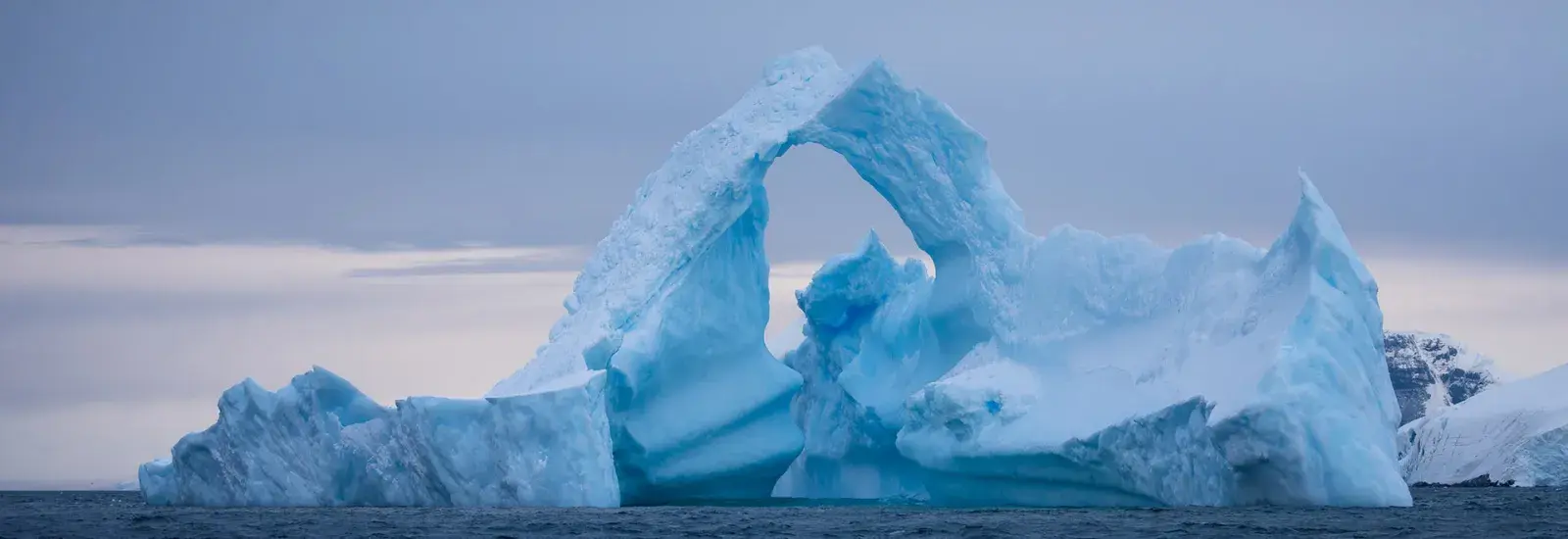
Antarctica Travel information
Antarctica travel information is essential for anyone planning an expedition to the world’s most remote and pristine continent. This comprehensive guide covers how to get to Antarctica, the best time to visit, passport and visa requirements, travel insurance, health and safety advice, packing tips, onboard life, and details about popular destinations such as the Antarctic Peninsula, South Georgia, the Falkland Islands, and the Ross Sea. Whether you're considering a classic cruise from Ushuaia, a fly‑cruise to King George Island, or a rare departure from Australia or New Zealand, this resource provides clear, practical insights to help you prepare for an unforgettable polar adventure.
How do you get to Antarctica?
When is the best time to go?
Travel advice and safety precautions
Passports & Visas
Insurance
Taxes & Charges
Money in Antarctica
Health Information
What Activities are Included?
What to Pack
Life onboard an expedition ship
How do you get to Antarctica?
The most popular and affordable Antarctic journey is to fly to Argentina and board your ship in the southernmost city of the world, Ushuaia.
From here you choose from a range of itineraries.
Antarctic Peninsula – 10-12 days
Due to its proximity to South America, the Antarctic Peninsula is the best value and most popular Antarctic destination. The Peninsula is renowned for its stunning scenery and abundant wildlife.
View our range of Antarctic Peninsula itineraries
Antarctic Circle – 12-14 days
Cross the fabled Antarctic Circle to the land of the midnight sun. Home to desolate, beautiful landscapes, continually shifting ice, and hardy Weddell seals.
View our range of Antarctic Circle itineraries.
Weddell Sea – 12-14 days
See enormous tabular icebergs and follow in the path of historic Antarctic Explorers to the rarely visited landscapes where you may even spot a rare emperor penguin.
South Georgia & Falkland Islands – 20-25 days
One of the world’s truly great wildlife areas. South Georgia is home to over 30 million breeding birds, thousands of seals, four penguin species, including large colonies of King penguins and macaroni penguins rarely encountered elsewhere, plus many more amazing creatures. Often visited alongside South Georgia, the Falklands Islands offers up plenty of natural beauty, wildlife, and intriguing history.
View our range of South Georgia, Falklands & Antarctica itineraries
Antarctica Fly Cruises - 6-14 days
If you’re short on time or prefer to skip the famous Drake Passage, flying to King George Island from Punta Arenas, Chile and beginning your Antarctic Peninsula adventure from there is an excellent option.
Most Antarctic cruises that start in Punta Arenas are Fly/Cruise itineraries that begin with a flight to King George Island, for cruise ship embarkation.
If you have disembarked your ship on King George Island, you will take a flight from King George Island airport to Punta Arenas. The flight generally takes 3-4 hours and most itineraries include a night post-cruise accommodation in Punta Areas.
Please note flights to/from Antarctica are subject to weather conditions and times may change. Be prepared to depart on your group transfer to the airport at any time on the day.
View our Antarctica Fly/Cruise itineraries
Antarctica departing from Australia or New Zealand - 20+ days
With only a few departures a year, a cruise to Antarctica from Australia and New Zealand offers the opportunity to witness the immense natural landscapes and seascapes of this incredibly remote yet ruggedly beautiful part of Antarctica and the best chance to see emperor and king penguins. Steeped in history, East Antarctica is where the explorers Scott, Shackleton and Amundsen gained fame with their expeditions to be the first to reach the South Pole.
Hobart in Australia and Invercargill in New Zealand both host Antarctic cruise vessels heading south for the summer. A round trip cruise to this part of the world will take about 21 days all up, including 7 days crossing to Antarctica, frequently stopping to visit remote islands such as Macquarie, Snares, Auckland and Campbell.
View our range of Antarctica from AU & NZ itineraries
Related blogs:
- How long does it take to get to Antarctica from Australia
- East Antarctica & the Ross Sea travel guide
- The most famous explorers of Antarctica
- Video: How to get to Antarctica
When is the best time to go to Antarctica?
The best time to travel to Antarctica will depend on the type of experience you are after. Wildlife highlights, length of daylight hours, and the overall feel of your expedition will change dramatically throughout the cruising season (October to March).
Early Season (October - November)
Visit Antarctica early in the season and you’ll be rewarded with pristine landing sites, striking ice formations, lively courtship displays, and golden light that’s perfect for photography. In the sub‑Antarctic islands, elephant and fur seals begin staking out their breeding territories, and with a bit of luck, you might even witness one of the first dramatic iceberg calvings of the year — an unforgettable sight.
Mid Season (December – January)
Mid‑summer is the most popular time to visit Antarctica, with the warmest temperatures of the season and long daylight hours that allow for more landings and exploration. This is when you’ll find sunbathing seals, newly hatched penguin chicks, and increasing numbers of whales arriving for the summer feast. Calmer seas and reduced sea ice make it easier to reach landing sites, which is why so many travellers choose this period. As it’s the busiest time of year, securing your spot early is highly recommended.
Late Season (February-March)
The temperatures may be dropping, but late‑season Antarctic cruises are bursting with wildlife. February brings peak whale sightings, rising seal numbers along the Peninsula, and penguin rookeries overflowing with activity in South Georgia. Shorter days mean spectacular sunsets, incredible night skies, and some of the best‑value expeditions of the year. It’s also the busiest month for voyages from Australia and New Zealand heading toward East Antarctica.
Related blogs:
- The best time to visit Antarctica
- Travelling to Antarctica in November and December
- Video: When to go to Antarctica
Travel advice and safety precautions
Australian citizens
We recommend registering with Smartraveller to be kept up to date with the latest travel advice and safety precautions:
https://www.smartraveller.gov.au/
New Zealand citizens:
We recommend registering with Safe Travel be kept up to date with the latest travel advice and safety precautions:
https://www.safetravel.govt.nz/
UK citizens
We recommend checking the FCO website for the latest travel advice and safety precautions:
https://www.gov.uk/foreign-travel-advice
United States Citizens
We recommend enrolling in STEP (Smart Traveler Enrollment Program) to be kept up to date with the latest travel advice and safety precautions:
https://travel.state.gov/en/international-travel/travel-advisories.html
Canadian citizens
We recommend registering with Canadians Abroad. A free service that allows the Government of Canada to notify you in case of an emergency at your destination or a personal emergency at home.
https://travel.gc.ca/travelling/registration
Passports and Visas
Passport validity
Please ensure that your passport is valid for at least six months after the return date of your holiday, and you have sufficient blank pages for any entry/exit stamps.
South Georgia Visa
From 1 August 2025 all passengers entering South Georgia and the South Sandwich Islands will require an Entry Permit. The application must be submitted at least 14 days prior to arrival. Apply here: https://eta.entry.gov.gs
For more information on visas in South America visit our visa travel information page.
Travel insurance
Travel Insurance is one of the most important components of any trip, especially if you are travelling to Antarctica - the most remote and inhospitable place on Earth.
It is vital that you have comprehensive cover for:
- Accidents & Emergency evacuation
Because of the remoteness of Antarctica, medical attention and evacuations and repatriation to your home country are extremely expensive. A lot of cruise operators will require you to have unlimited cover for this or at least to cover a specified amount which can differ between operators so please check with your booking agent. - Sickness & Loss of luggage
If you have any existing medical conditions, you will need to declare these and there are some things that may not be covered. Refer to the wording of your chosen policy and read this carefully. - Cancellation/Disruption to travel
You should have adequate cancellation cover and take out a policy at the time of booking so you are covered in case of unforeseen circumstances that may prevent you from travelling. Travel insurance will also protect you against disruption to travel and alterations to your pre-booked travel plans, if local issues arise. - Weather
Travel delays and unforeseen disruptions are not uncommon in Antarctica - mainly due to weather and sea conditions, so please take a policy that covers this. - Specific Destinations/Cruise cover
Select a policy that will cover all your intended destinations in Antarctica. Some policies, for example, may not cover for travel further south than the Antarctic Circle. If your cruise is bound for East Antarctica or you are joining a Polar Circle expedition, please check that your policy includes these destinations as well as anywhere else on land you will be spending time, such as the Falkland Islands, Uruguay, Argentina or Chile. For some policies you will need to select ‘cruise cover’ to be covered while you are onboard. If you have any doubts, please check with your policy provider. - Activities
Please ensure you have adequate cover for any additional activities you may take part in, such as camping, mountaineering. kayaking, skiing and diving.
Taxes & Charges
Baggage Allowances
Please check with your airlines ahead of time and/or when booking flights to determine what your carry-on and checked bag allowance is as this often varies. Excess baggage fees can be very expensive.
Domestic flights often have stricter baggage restrictions and some carriers do not include baggage allowance on their domestic routes and will charge upon check in.
Charter flights also have very strict luggage restrictions, please refer to your documentation if relevant to your booking.
Always carry your important documents and necessities (including any prescribed medication) in your carry-on luggage.
Fuel Surcharges
Please note that should world oil prices increase significantly prior to departure your cruise booking may be subject to fuel surcharges. Cruise operators do attempt to factor this into the price of your cruise. However, unexpected rises in the cost of marine fuel can change rapidly and sometimes it is necessary for these to be passed on. By booking a tour with us, you accept this as part of our booking terms. Once we have been notified of any surcharges from the cruise operator, we will endeavour to advise you as soon as possible.
Changes to schedule
Antarctica is an extreme environment. While all efforts will be made to keep to the planned schedule, there may be reasons outside of the cruise company’s control that will result in changes to your planned program. For South Georgia and Falkland Islands itineraries please be aware that sea crossings to and from the Peninsula are quite long (around two full sea days) and sometimes the timing of these crossings needs to be adjusted to align with suitable sailing weather. If the itinerary is changed to allow for weather (or other factors) then you agree that this is the nature of expedition cruising and that no compensation will be offered because of applicable itinerary changes.
Deposit & Final Payment
Please refer to your invoice for details of deposit and final payment. All deposits are non-refundable as per our terms and conditions. It is important to remember that failure to pay deposits or to make the final payment by the due date may result in the cancellation of your booking.
Money in Antarctica
Antarctica does not have local currency.
Port Lockroy Post Office
Accept US dollars, Pounds and Euros.
Falkland Islands
If your Antarctic cruise includes the Falkland Islands the currency of the islands is the Falkland Islands Pound (FK £), although the Pound Stirling is accepted as well.
Most cruise ships accept Euros and US Dollars.
Major credit cards are also widely accepted on board and usually all on board purchases made during the cruise are charged to your cabin and settled at the end of the voyage.
Tipping Guidelines
Crew members are paid a fair wage. Tipping staff is still recommended for good service. You can choose what you deem fair and think about what you would pay in your home country.
A suggested amount would be US$15 per day.
Without the crew, and their expertise, the voyage would not be possible. On most cruise ships, tips are collected centrally and distributed amongst the entire crew.
Health Information
Most Antarctic cruise ships have an infirmary and a qualified physician on board to provide routine and emergency health care. There is usually a charge for a consultation and for any medication prescribed, although seasickness is often treated free of charge.
Vaccination requirements
Yellow Fever
An International Certificate for Yellow Fever is necessary if you are arriving in Argentina from an infected area within five days.
Medication brought from home
It is recommended to pack double the amount you might require.
Seasickness
Motion sickness is very common, particularly when crossing the Drake Passage, which is often rough. There are a variety of over the counter and prescription remedies available. Inter-dermal patches (such as Scopolamine patches) and bands tend to be the most effective preventative medication. Seasickness medication is most effective if taken prior to the onset of nausea - so don’t wait until you feel sick to start taking it. If you are prone to motion sickness, it is best to stay hydrated, eat small amounts regularly and avoid alcohol, tobacco, excess liquids and confined spaces.
What Activities can I do in Antarctica?
An Antarctic expedition cruise typically includes everything you need for an unforgettable journey — expert-guided shore landings and Zodiac cruises, daily wildlife encounters, photography opportunities, and a full programme of activities like the iconic Polar Plunge and citizen science programs. Many voyages also include extras (at an extra cost) like kayaking, camping, snow shoeing and even diving or snorkelling - giving you the chance to experience Antarctica from every angle.
Related blogs:
- What is zodiac cruising in Antarctica and the Arctic
- Your guide to the polar plunge
- Camping in Antarctica
- Kayaking and day paddle explained
- How much fitness is required
- How to get involved in Citizen Science programs
- Photography tips
- Top activities to do in Antarctica
- Birdwatching in Antarctica
- Video: Things to do in Antarctica
What to Pack
Antarctica is an extreme environment, and the weather can change dramatically with no warning. UV radiation is stronger than anywhere else on the planet, and you should bring plenty of sun protection. Temperatures vary from -20°C to + 5°C (-4°F to 41°F). For your comfort avoid getting wet and bring wind and waterproof outer layers. Wool, silk and some of the new synthetic fibers like polar fleece retain heat better than cotton.
Body heat is easily lost from the hands and feet and the head, so keep them warm and dry. For hands, mittens are better than gloves and wear a hat or beanie. Between each layer there is a film of trapped air which, when heated by your body, acts as an excellent insulator. It also gives you the flexibility to remove a layer if you are too warm to keep you from overheating.
We recommend that you pack your gear in sturdy soft-sided luggage to make it easier to stow in your cabin. Try to avoid overpacking and bring informal, practical attire for your trip that can be worn in layers.
Clothing guide for excursions
- Thermal underwear
- T-shirt
- Down inner jacket
- Fleece (for extra cold days)
- Waterproof outer jacket (usually provided)
- Waterproof trousers (essential – you cannot ride on zodiacs without these)
- Thermal socks
- Waterproof gloves (and glove liners)
- Boots (supplied by ship)
- Scarf/Snood
- Sunglasses
If you would like rent your gear visit: chimu.newheadings.com
Order your gear and pick up in Ushuaia or Punta Arenas the day prior to your cruise.
Clothing for the ship
- Underwear & socks
- Pyjamas
- Gym clothing
- Toiletries & medication
- T-shirts
- Jumpers
- Nice shirt for casual dinners
- Swimsuit (hot tubs & polar plunge!)
- Jeans/trousers
- Enclosed shoes
Related blogs:
- How to prepare for an Antarctic cruise
- Video: How to pack for an Antarctica Cruise
- Video: What to wear on an excursion
Life onboard an expedition ship
Expedition ships are much smaller than large contemporary cruise ships with more limited facilities. The majority have a lecture theater, lounge, library and a bar and restaurant. Some ships may have a gym, spa, sauna or small pool. Ships are generally not equipped with stabilisers (this helps them to land close to shore) and hence can move significantly in areas such as the Drake Passage crossing. A doctor is on board, in case of major sickness, but passengers should be prepared.
Daily Program
The expedition leader will advise the program for the following day in the evenings. They will outline mealtimes, activities, events, excursion times and details of any lectures or presentations. There may be changes to the scheduled daily program due to weather, sea and ice conditions or to take advantage of opportunities such as wildlife sightings.
Dress on board
We recommend you wear casual and informal clothes onboard that are lightweight and easy to care for. Warm clothing is needed when on deck. You should opt for things you can layer in a hurry if there’s a wildlife sighting. Some ships require slightly dressier attire, such as a sports jacket and collared shirt for men, and equivalent for women, for the captain’s dinner or special occasions such as Christmas and New Year dinners.
Food & Dining
Most Antarctic vessels have dining rooms that can seat all guests in one sitting. The menus feature a diverse selection of dishes prepared by chefs. Breakfasts and lunches tend to be buffet style, while dinner is usually a three or four-course meal. Vegetarian options are available but please advise us of any special dietary requirements at time of booking or note these on your Passenger Information Form. Some dietary requirements may be more difficult to cater to. If you do not advise of dietary requirements in advance, it may not be possible to cater to them.
Internet
You can stay connected to the internet on board most Antarctic ships. Connections can be slow and most ships charge you based on the amount of data you use. Mobile phones and roaming do not work in most areas. Please refer to your pre-departure information for more information about what your ship offers.
Laundry
Most ships provide a laundry service. You will be charged per item. Some ships have a heated mudroom where wet clothes can be stored and dried.
Electrical Outlets
The electrical outlets on board many vessels are 220V (AC current) with European 2 pin round holes, as well as 110-volt shaving sockets in bathrooms for electric razors. Please check your pre-departure information and consider bringing an international adapter and you may need to bring a voltage converter.
Smoking
Smoking is only allowed in designated areas on the outside decks. Smoking is not permitted anywhere inside the vessel, in cabins or anywhere near the Zodiacs and is strictly prohibited when making onshore landings. Please remember to respect the natural environment and dispose of all cigarette butts in designated ashtrays or bins. DO NOT under any circumstance throw any cigarette butts overboard.
Zodiac Cruising
You will be transferred from the ship on excursions by Zodiacs. These are large, stable vessels that are extremely safe and designed for expeditions. They are used for Zodiac cruises among icebergs and alongside wildlife such as whales. Most zodiacs carry between 10 and 15 people. Your ship will provide a briefing, including information on the best and safest way to board and exit a Zodiac and the difference between wet and dry landings. They will have specific rules and regulations but the following acts as a general guide.
- Keep your hands free of personal items so you can hold on and accept assistance when embarking or disembarking the Zodiac.
- Bring waterproof bags or dry sacks to store electronics and valuables.
- While the Zodiac is in motion, you must remain seated with your feet on the deck. Never attempt to stand unless the Zodiac driver has given permission to do so. On arrival at a landing site or alongside the ship gangway, remain seated until instructed to disembark.
- Keep your body, arms and hands inside the Zodiac to avoid injuries.
- Boots and clothing must be cleaned before and after each landing to avoid contamination of landing sites.
Related blogs:
 We Value Your Privacy Settings
NextRoll, Inc. ("NextRoll") and our 20 advertising partners use cookies and similar technologies on this site and use personal data (e.g., your IP address). If you consent, the cookies, device identifiers, or other information can be stored or accessed on your device for the purposes described below.
You can click "Allow All" or "Decline All" or click Settings above to customise your consent regarding the purposes and features for which your personal data will be processed and/or the partners with whom you will share personal data.
NextRoll and our advertising partners process personal data to:
● Store and/or access information on a device;
● Create a personalised content profile;
● Select personalised content;
● Personalised advertising, advertising measurement, audience research and services development;
● Services development.
For some of the purposes above, our advertising partners:
● Use precise geolocation data.
Some of our partners rely on their legitimate business interests to process personal data. View our advertising partners if you wish to provide or deny consent for specific partners, review the purposes each partner believes they have a legitimate interest for, and object to such processing. If you select Decline All, you will still be able to view content on this site and you will still receive advertising, but the advertising will not be tailored for you. You may change your setting whenever you see the on this site.More Info