
The Complete Travel Guide to Galapagos Islands Cruising
The Galapagos Islands are one of the world’s most spectacular destinations, but if you’re thinking of visiting, how do you even begin to plan your visit? You’re not alone, as we know that its remote location makes logistics and planning for the best Galapagos Islands trip a little confusing. We’re here to help.
We’ve compiled this complete travel guide to the Galapagos Islands to help you get started on your adventure!
Why visit the Galapagos Islands?
Many visitors are drawn to the Galapagos Islands for its famed biodiversity, home to incredible species not found anywhere else. The wildlife of the Galapagos, in particular the finches, inspired Charles Darwin’s theory of evolution by natural selection, fundamentally changing our understanding of science and biology.
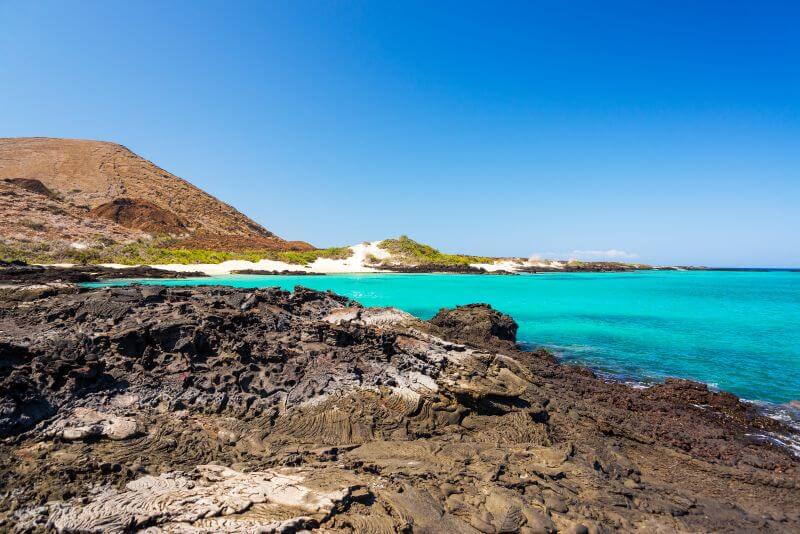
Part of Ecuador, the islands are about 1,000 km/600 miles off the coast, so they do take some time to reach — but it’s worth the effort, we promise. Almost as soon as you arrive, you’ll notice unique wildlife encounters, incredible volcanic landscapes, and world-class snorkelling and diving. If you’re passionate about the outdoors, it’s hard to think of a better place to visit than the Galapagos Islands.
Getting to the Galapagos Islands from Australia
How do you get to the Galapagos from Australia? Reaching South America does take some time, but many travellers plan an extended voyage, visiting not just the Galapagos but also other parts of the continent or even combining South America with an Antarctica cruise.
Most Australian travellers depart from Sydney or Melbourne, flying to Santiago, Chile. The major operators for direct flights are LATAM Airlines and Qantas. From Santiago, you would take a connecting flight to Quito or Guayaquil, Ecuador.
From mainland Ecuador, you then fly to either Baltra Island or San Cristóbal Island, the two Galapagos departure points for most cruises.
Getting to the Galapagos Islands from North America
From the United States, it’s possible to fly directly to Quito from several major cities, including Miami, Atlanta, and New York City. Then, from mainland Ecuador, you fly to either Baltra Island or San Cristóbal Island, the two Galapagos departure points for most cruises.
From Canada, Air Canada operates direct flights to Quito from Montreal and Toronto. These are seasonal and generally operate from December-March, however, you can also find indirect flights year-round.
Galapagos Islands cruises versus land tours: Which one is right for me?
If you’re seeking an immersive travel experience where you can make the most of your time, an expedition cruise is the best way to see the Galapagos. You’ll travel overnight, waking up in a new location each day, visiting remote areas not accessible on day tours.
The top Galapagos Islands cruises take only a small number of passengers and are inclusive of your naturalist-guided excursions, all meals and boarding, and the comfort and luxury of your catamaran.
However, if you are on a very tight budget or have concerns about seasickness, you may prefer a land-based experience. Hotels can be found on several islands, including San Cristóbal and Isabela.
How many days are needed for a Galapagos cruise?
The majority of cruises are between 4-8 days, but what is the best duration for a Galapagos Islands sailing? Generally, a 7-8 day Galapagos cruise is the most popular itinerary, as it gives you time to visit several islands, but also have time to relax onboard and enjoy your luxurious catamaran.
However, even shorter cruises of 3-4 days can still provide a fantastic Galapagos experience and are popular with travellers short on time, with tight budgets, or those who don’t love the idea of extended cruises.
Environmental regulations on the Galapagos Islands
Due to the unique biodiversity of the Galapagos, strict environmental and tourism regulations have been put in place by the Galápagos National Park Directorate (GNPD) and the Ecuadorian Ministry of Tourism to look after the delicate environment, which became the world’s first UNESCO World Heritage Site in 1979.
These include the requirement that there must be one certified naturalist guide for each group of up to 16 passengers, with the guide being local to the islands and paid a fair living wage.
Each tour provider and ship operator must also follow guidelines on water usage, recycling, and keeping a safe distance from all wildlife. The wildlife safety guidelines will be explained to you in detail by your guides before your first landing.
The stringent requirements for tourism to the Galapagos are heralded as one of the best examples of how tourism can be managed in a sustainable way and we encourage you to read more on the topic before you travel.
What are the best Galapagos Islands expedition cruise itineraries?
Galapagos sailing routes are strictly regulated to ensure each vessel has proper permits and that no one location is visited too often, for reasons of environmental protection and wildlife conservation.
Generally, ships follow set routes, each offering unique wildlife and landscapes. While each is amazing and will offer plenty of incredible opportunities to see the biodiversity of the islands, here is an overview of each. However, many species, such as sea lions, can be found all throughout the islands.
Northern Islands route
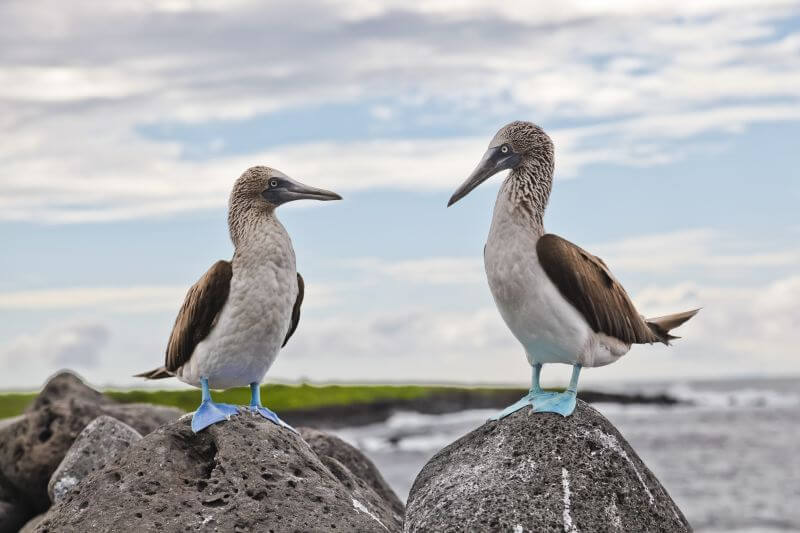
The Northern Islands, including Santa Cruz, Santiago, Baltra, and Genovesa, are popular for birdwatching and snorkelling. You’ll get to see many species of boobies, including the red-footed and Nazca species, large seabird colonies, and frigatebirds.
If you enjoy snorkelling and diving, you can often spot turtles and rays off the coast, offering clear waters and lots of marine diversity.
Western Islands route
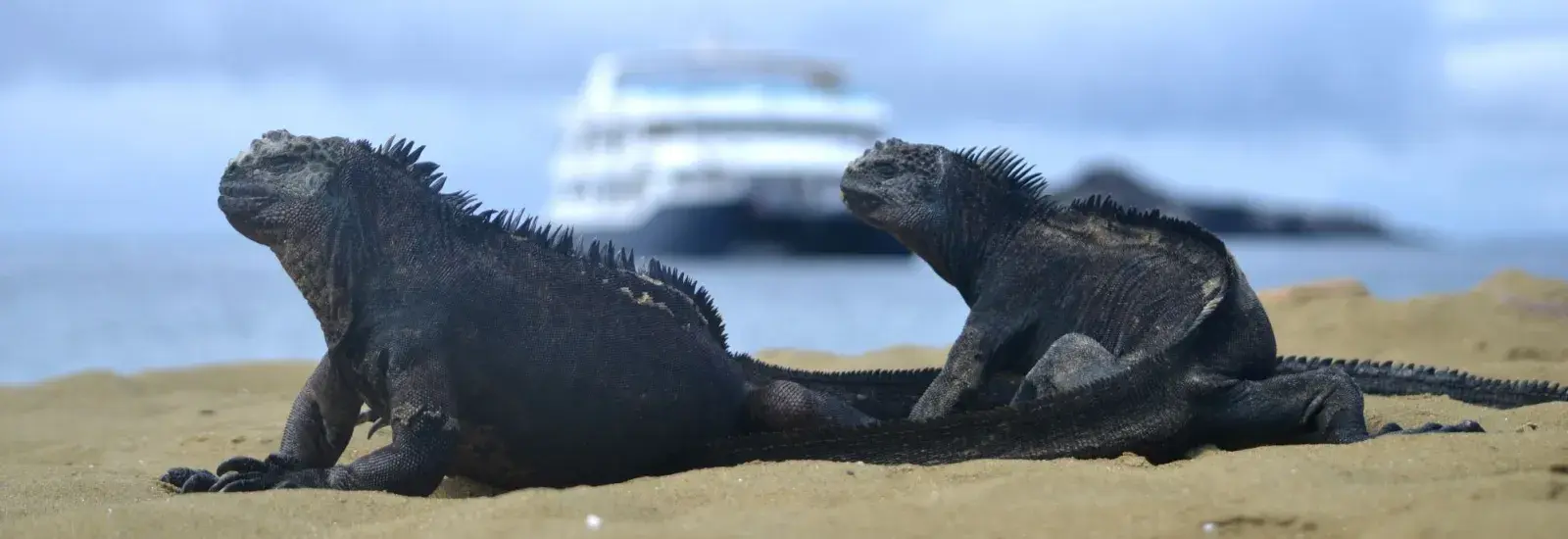
Fernandina and Isabela Islands are very popular for wildlife seekers and photographers. The best Western Islands Galapagos cruise will offer the chance to observe Galapagos penguins, Sally Lightfoot crabs, marine iguanas, the Galapagos hawk, and the flightless cormorant.
Southern Islands route
When you visit the Southern Islands, including Floreana and Española, you can also find incredible wildlife, including flamingos and giant tortoises, but also unique attractions. On Floreana, stop by Post Office Bay and leave a letter in a barrel to be hand-delivered by another traveller on a future visit!
Central Islands route
The Central Islands include the main inhabited Galapagos islands, including Santa Cruz, Baltra, and San Cristobal. There are plentiful wildlife and bird species to see, and Santa Cruz is home to the Charles Darwin Research Station. Here, you can observe giant tortoises and learn about the research and wildlife conservation programs of the archipelago.
Some longer cruises may trace more than one route. It’s important to note that some species are only found in certain regions of the Galapagos, so if you’re set on photographing a specific bird species, for example, our Destination Specialists can help you plan an itinerary that will best suit your interests.
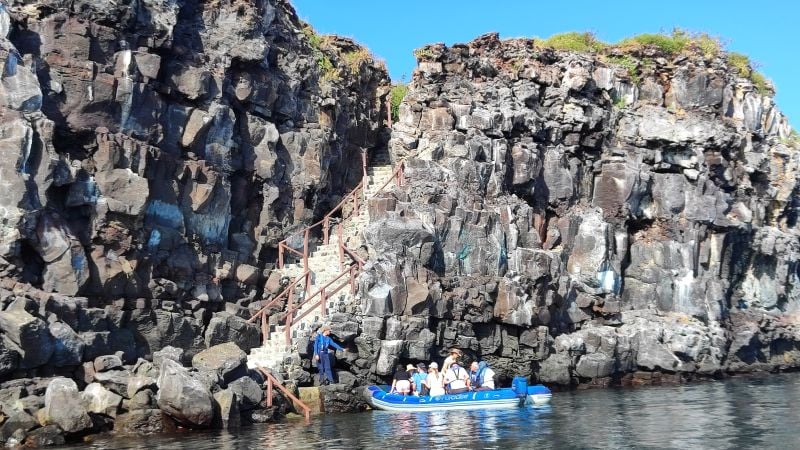
Galapagos Islands cruise activities
What can you do on a Galapagos cruise? Each day, your expedition guides will talk you through your options, but you can expect a varied and fun range of options!
Depending on which island you’re visiting, the weather conditions, and your interests, you may enjoy a scenic panga boat ride (an inflatable, motorised boat, similar to a zodiac), guided nature walks, snorkelling, volcanic summit hikes, kayaking, or visits to conservation and research centers.
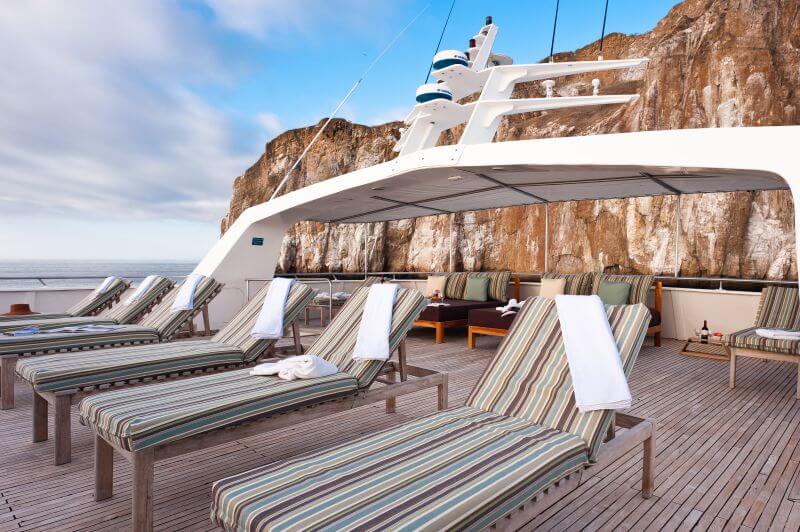
There will also be leisure time onboard where you can go for a dip in the hot tub, relax on the outdoor lounges, or simply make the most of the ship’s amenities.
Galapagos entry requirements
Entry and exit to the Galapagos are strictly regulated to ensure tourism is managed carefully. There are a few entry requirements to be aware of before you go. Your Destination Specialist can provide additional details, but ensure you’re able to meet the following:
- Your passport must be valid for six months or longer after your departure date
- Transit Control Card (TCT): $20 USD per person
- National Park Fee: $200 USD per person
(Please note the above fees are accurate as of 2026 but are subject to change.)
On Chimu’s Signature Galapagos packages, the TCT and the National Park Fee are included, but on other itineraries, this may be an additional expense. But either way, we’ll let you know all the details at the time of booking.
Your luggage will also be inspected to ensure you’re not inadvertently bringing any invasive species or biosecurity risks to the islands. When travelling with Chimu Adventures, comprehensive travel insurance is also required, but your Destination Specialist can organise this on your behalf.
How to compare Galapagos Islands cruise ships and plan your perfect adventure
If you have questions about planning the best Galapagos cruise, or are ready to book, please get in touch. Our team of Destination Specialists have first-hand experience with travelling through Ecuador and the Galapagos and can help you compare ships and itineraries based on their insider knowledge, ensuring you find a sailing that will be ideal for your interests and schedule.
The Chimu Adventures team is here to help and can help you not only find the perfect cruise, but also your flights to South America, transfers, and any additional travel before and after your Galapagos cruise.
FAQ's
Frequently Asked Questions
Q1. How can I compare small ship Galapagos cruise operators?
It can be hard to decide on the best Galapagos company, but feel free to get in touch with the team at Chimu Adventures for assistance. We are Galapagos experts and can help you compare ships based on itineraries, comfort levels, departure dates, and so much more.
Q2. Are there any discounts for booking a Galapagos cruise far in advance?
Some Galapagos cruise operators offer early-bird discounts to reward those who book ahead, which may take the form of a percentage discount, a cabin upgrade, or the inclusion of flights to and from mainland Ecuador. If you’re looking for a Galapagos cruise discount, the Destination Specialists at Chimu Adventures have access to a wide range of exclusives from our partners and can help you find the best possible deal.
Q3. Are children allowed on Galapagos Island cruises?
Yes, children are allowed on almost all Galapagos cruises, and it is a very family-friendly destination. Each ship operator has its own age requirements, but in general, children six years and over are welcome.
Q4. What is the average cost of a Galapagos cruise?
The price of a Galapagos cruise varies based on many factors, including the cruise duration, the vessel, the cabin type selected, and the level of luxury offered onboard. As an estimate, a 7-day Galapagos cruise may cost between 6,000-10,000 AUD per person.
Q5. What are the visa requirements for Australian citizens traveling to the Galapagos Islands?
As of 2026, Australian citizens will receive an entry stamp on arrival into Ecuador for up to 90 days. The passport must be valid for at least six months, and you’ll need to show proof of a return ticket. For the Galapagos Islands specifically, travellers need to comply with all biosecurity regulations and must also pay the National Park Fee of $200 USD and the Transit Control Card fee of $20 USD per person, both subject to change. Please note both fees may already have been included in your Galapagos cruise fare.
Q6. Will I have Wi-Fi on my Galapagos cruise ship?
Yes, many Galapagos ships offer Wi-Fi at an additional cost, but there may be times when no service is available.
Where Will You Go Next ?

Talk to one of our experienced Destination Specialists to turn your Antarctic, Arctic and South American dream into a reality.
Contact us