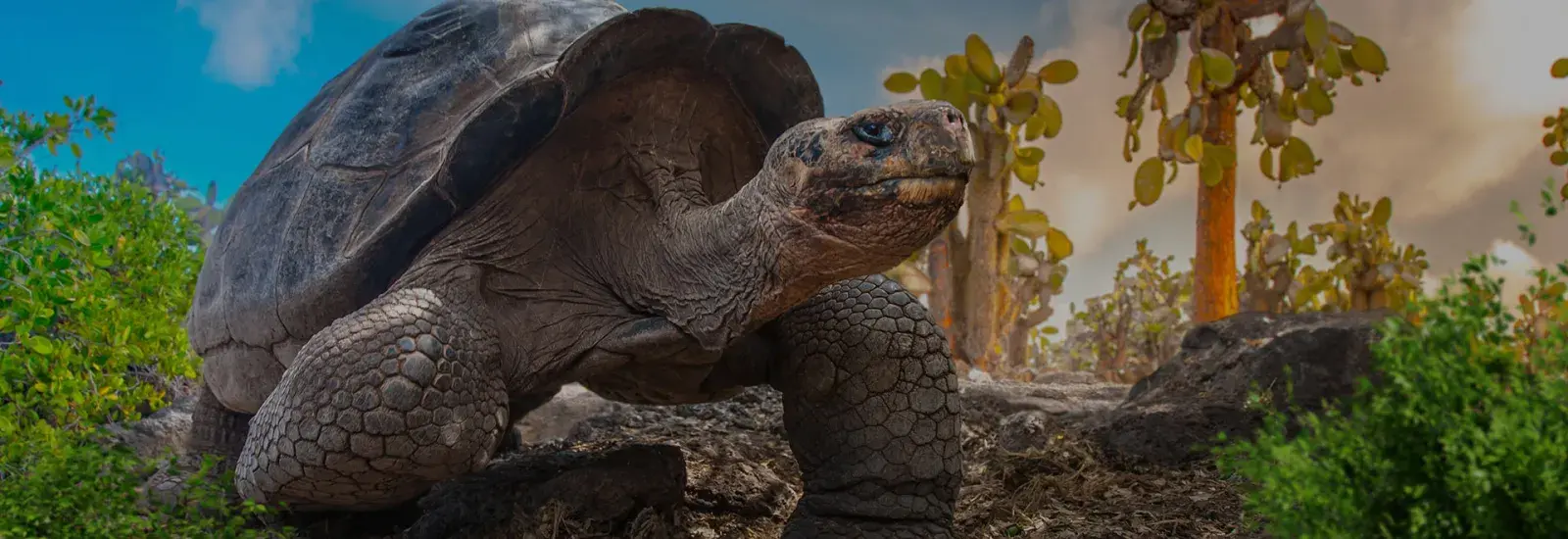
galapagos islands travel information
Galapagos travel information is essential for planning a journey to one of the world’s most unique wildlife destinations. This guide brings together key details on how to get to the Galapagos Islands, entry requirements, the INGALA Transit Control Card, national park fees, responsible travel guidelines, packing advice, health and safety considerations, and what to expect on expedition cruises and island‑hopping itineraries. Whether you're visiting iconic islands like Santa Cruz, Isabela, San Cristóbal or Española, or hoping to encounter giant tortoises, marine iguanas and blue‑footed boobies, this resource provides clear, practical information to help you prepare for an unforgettable Galapagos adventure.
Permits
Starting December 1st 2024, all travellers to the Galapagos Islands must complete an online sworn declaration for prior to their flight. https://declaracion.abgalapagos.gob.ec/declaracion
Galapagos National Park Tax
All visitors to the Galapagos Islands are required to pay a National Park Tax of US$200 for adults and US$100 for children under 12 years old. This is payable in CASH ONLY on arrival and is in addition to all costs for your journey previously paid.
Please note that the fee may be subject to change. We generally include the Galapagos Transit Control Card costs in our packages, if in doubt please check your final itinerary for details of this.
When is the best time to visit the Galapagos?
The Galapagos Islands have a subtropical and dry climate with comfortable temperatures year-round. The warmest months are usually from December to June (high season). Sea temperatures are higher, but it can be hot and humid from January to March. From July to November (low season) you can expect cool winds that occasionally bring with them a light misty drizzle called “garúa” and the ocean is a lot colder. Each month brings unique climate variations to the Galapagos and with-it varying wildlife viewing opportunities. The months June, July and August are also very popular as the animals tend to be more active. For divers the peak season is from July to November when whale sharks can be found at Wolf and Darwin Islands.
Flight Information
You can only reach the Galápagos by first flying into mainland Ecuador in South America. Usually travellers fly into either Quito (UIO) or Guayaquil (GYE)—the two cities with airports authorised to operate Galápagos-bound flights. From there, daily departures connect you to the islands’ two airports, Baltra (GPS) and San Cristóbal (SCY). Guayaquil offers the shortest and most direct flights (about 1.5 hours), while Quito flights usually route through Guayaquil before continuing on to the islands.
Landings
Dry Landings
Passengers step directly from a dinghy (known locally as a panga) to rocks or onto a dock.
Wet Landings
The dinghy will edge up to a beach, allowing you step into knee-deep water assisted by crew members and guides. Please consider if you are comfortable and physically able to do a wet landing, which also involves getting in and out of the dinghy.
Safety
If you are on an expedition cruise you will receive special orientation in terms of fire and other safety reasons, a procedure necessary for the unlikely event of emergency during your stay on board.
Tipping Guidelines
On your Galapagos cruise, you will be asked to tip ship staff and your naturalist guide. Tips are optional, but it is suggested that you do contribute something. You will generally be given a suggested tipping amount for the ship staff and for your guide. Some companies accept credit card, and you can add tips to your room bill, but many require these to be paid in cash onboard. ATMs on the islands are limited, so we suggest that you take cash with you for any onboard expenses. Generally, USD is the most widely accepted currency.
Health & Fitness
We recommend that passengers be in reasonably good physical condition as some trails are uneven or steep. Elderly or disabled people may find them difficult.
The local cruise operators reserve the right to refuse a passenger if someone fails to inform us of any physical disability, or who in the opinion of the company constitutes a danger to themselves, other guests, members of the crew, or to the operation of the vessel.
Sustainability & Preservation
Approximately 97% of the Galapagos Islands are listed as a National Park, and only 3% is accessible by tourists. When you are visiting national park landing sites, you will travel with multilingual, naturalist guides who are trained locally to conserve the environment and licensed by the Galapagos National Park. The park is strictly regulated, there are time and number restraints for visits. Passengers must be accompanied at all times by a guide. The guides know each site intimately, and will share their knowledge during walks and hikes, as well as during slide shows and briefings if you are travelling on an expedition ship. You must not leave any rubbish or drop anything overboard while on or near the Galapagos Islands and you should take only photos and videos with you when you leave. Wildlife should never be disturbed you should ensure to keep at least two metres between you and any animals.
One of the greatest dangers to the islands is introduced species, as after evolving for thousands of years without predators, the Galapagos wildlife is not adapted to dealing with non-native species.
When travelling to the islands, please ensure that you:
- Do not bring any plant or animal life with you and always clean your footwear when travelling between islands to avoid transferring seeds.
- Never feed the animals as this can be detrimental to their health and feeding behaviour.
- No Smoking* and making campfires in the National Park areas is strictly forbidden.
- No fishing, jet skiing, submarines, water skiing or aerial tourism these are also all strictly forbidden.
Please ensure to co-operate with your guide and other travellers to preserve the fragile and unique eco system that is the Galapagos.
What to Pack
The weather in the Galapagos is quite temperate all year round. In most cases you will be in the water snorkelling or swimming for a portion of the day (so two swimsuits are advised!), with the other time taken up with an island visit/walk or time to relax on the boat as you travel between islands. Some landings may include a volcano walk or over lava fields, and you may feel more comfortable in sturdy hiking shoes or boots. Otherwise, a pair of sturdy sandals are great for wet landings.
Make sure you bring all required medicines, (like prescriptions, preventative motion sickness medication, and pain killers). Since you will be outdoors a lot, have adequate sun protection, including biodegradable sunscreen and lip balm. Also bring any biodegradable toiletries that you may need while in the Galapagos, including laundry soap. It is also essential to bring your original passport with you as it is an entry requirement for the Galapagos.
As the weather is fairly warm year-round (typically between 21°C - 32°C), a light sweater will suffice for any cooler temperatures you might experience. Otherwise pack for warm weather (and humid, depending on when you are travelling), think shorts, t-shirts, light weight long sleeves, trekking pants, etc.
Clothing
- T-shirts
- Shorts
- Lightweight breathable clothes
- Zip off trekking pants
- Light sweater/jumper
- Two swimsuits
- Lightweight rain jacket/poncho
Documents
- Passport (requirement for entering the Galapagos)
- National Park Permit
Accessories
- Trekking sandals
- Thongs/flip flops
- Comfortable shoes (sneakers will suffice for most shore landings)
- Wide-brimmed hat
- Sunglasses
- Water bottle
- Small day pack
- Dry bag
Technology
- Camera (with zoom lens)
- Spare camera batteries
- Image storage device
- Underwater camera/go pro
Toiletries/Medication
- Personal/Prescription Medication
- Toiletries - please try to get biodegradable products
- Basic first aid kit
- Deodorant
- Hairbrush & hair bands
- Face & hand cream
- Lip balm with SPF
- Sunscreen SPF50+
- Insect repellent
View or range of Galapagos Itineraries
Related Blogs:
 We Value Your Privacy Settings
NextRoll, Inc. ("NextRoll") and our 20 advertising partners use cookies and similar technologies on this site and use personal data (e.g., your IP address). If you consent, the cookies, device identifiers, or other information can be stored or accessed on your device for the purposes described below.
You can click "Allow All" or "Decline All" or click Settings above to customise your consent regarding the purposes and features for which your personal data will be processed and/or the partners with whom you will share personal data.
NextRoll and our advertising partners process personal data to:
● Store and/or access information on a device;
● Create a personalised content profile;
● Select personalised content;
● Personalised advertising, advertising measurement, audience research and services development;
● Services development.
For some of the purposes above, our advertising partners:
● Use precise geolocation data.
Some of our partners rely on their legitimate business interests to process personal data. View our advertising partners if you wish to provide or deny consent for specific partners, review the purposes each partner believes they have a legitimate interest for, and object to such processing. If you select Decline All, you will still be able to view content on this site and you will still receive advertising, but the advertising will not be tailored for you. You may change your setting whenever you see the on this site.More Info