
Birdwatching in Argentina
Argentina has a diverse range of attractions to enjoy on your travels. If you’re just passing through, you’ll no doubt find yourself in Buenos Aires for a day or two. Hopefully, you’ll also have time for a side trip to Iguazu Falls.
Or, if you’re passing through en route to Antarctica, Patagonia offers an excellent diversion for a few days between Buenos Aires and Ushuaia. Together, these three destinations offer not only a variety of activities for the visitor but, for the birdwatcher, also a variety of habitats attracting a wide range of species.
A bird guide to Buenos Aires
Let’s start with Buenos Aires, a city on the Rio de la Plata with a greater urban area population of sixteen million people. You wouldn’t immediately think of birdwatching from that description yet, incredibly, Buenos Aires has the wonderful Reserva Ecologica Costanera right on the doorstep of the city centre. Perhaps it has deterred development over the centuries because much of the reserve is lowland swamp, but it also has forests, a riverine coastline and, on the city side, a man-made lake that attracts lots of waterbirds.
The reserve is not a long walk from the hotels of Recoleta. There are two gates, at the northern end and the southern end of the lake, which lead to a network of broad walking trails (popular with cyclists and joggers, much to the birdwatcher’s frustration), and wetland boardwalks. The gates open daily at 8.00 am – if you arrive on time, you’re sure to spot a few members of your own species with their khaki gear, binoculars and zoom lenses, sunhats, sensible shoes and earnest expressions.
It's possible to spend the first hour barely 100 metres inside the gates, as the semi-tropical gardens and lush forest contain many species of tanagers, flycatchers, doves, finches and woodpeckers.
You may already have noticed Picazuro pigeons, Rufous-bellied Thrushes and Chalk-browed Mockingbirds in the parks and gardens of Recoleta, and they are common here too. But the diversity of plants and habitat within the reserve attracts a diversity of bird species – in four visits, I’ve racked up 88 different species, 80 of which I’ve seen for the first time.
The main walking trail from the northern gate leads you through the forest to an area where you can look down into open swampland for a few hundred metres, and here you are likely to spot the Great Kiskadee, a beautiful bird with a black and white-striped head and a striking yellow breast.
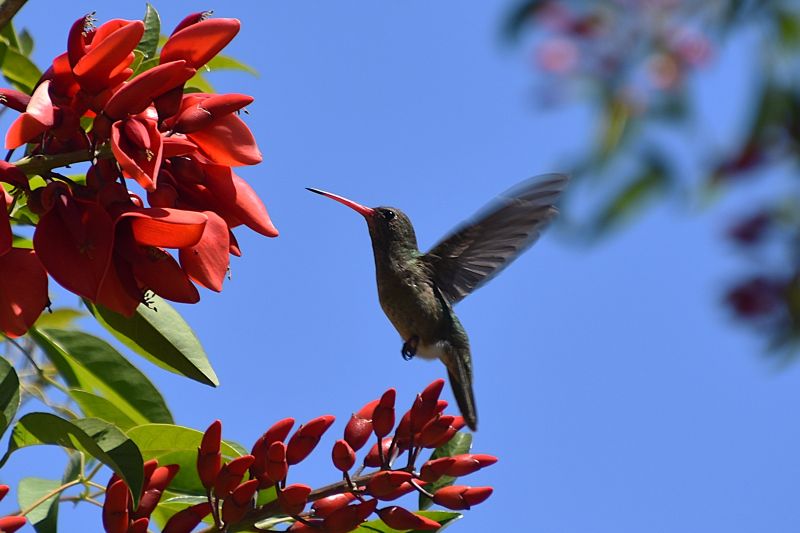
There are also three types of hummingbird here for those with a very keen eye, for they are so small and their movement is more like a quick, whirring blur than flight.
Eventually, the tree canopy gives way to an open, grassy area as the trail follows the river. Keep an eye on the skies, as parrots and birds of prey pass overhead – there are at least seven types of parakeet and nine types of raptor that can be seen here.
Walking back through the centre of the reserve are a series of boardwalks over a large, reedy, marshy area. As well as lots of ducks and waterbirds, the boardwalks afford a view of a row of tall, shiny apartment towers that remind you just how close this precious resource is to the metropolis.
After two or three hours pursuing birds amidst foliage, the man-made lake is something of a relief as you can photograph a myriad of species paddling the water or preening themselves on man-made islands.
The lakeside walk is lined with food vans and pop-up cafes so it has something of a carnival atmosphere (I’m told the Portenos have long treasured the tradition of spending an afternoon here), which means that when you realise you’ve had enough walking, at least you can sit down, enjoy an empanada and a drink, and it’s easy to catch a taxi or an Uber from here and you’ll be back in your hotel room reviewing your hundreds of bird shots within 15 minutes.
Bird watching in Iguazu Falls
Iguazu Falls is a wonderful diversion from Buenos Aires, and well worth the almost two-hour flight to the north. With Victoria and Niagara, it ranks as one of the planet’s three great waterfalls. Some would argue Iguazu is the prettiest, with its rainforest setting and multiple cascades. It’s also the most accessible, with boardwalks on both sides of the river affording stunning views close to the action.
Ok birdwatchers, you’re there for the falls first and foremost, and while the main show is deserving of your full attention, there’s no harm in also keeping an eye out for diversions of the feathered variety.
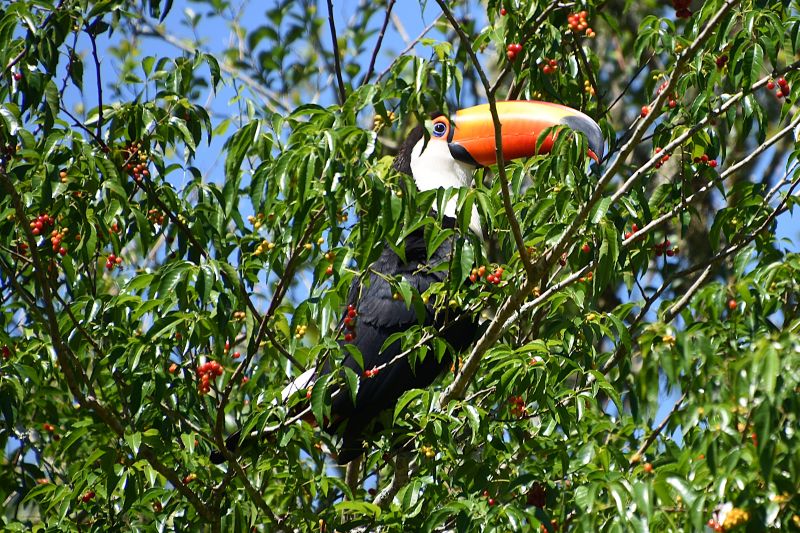
The sub-tropical rainforest is, of course, full of birds, a completely different habitat that offers a huge range of new species. Number one on any birdwatcher’s wishlist is the toucan, and several varieties can be found here, if you’re in luck. I was in luck.
Within five minutes inside the National Park gates, three Toco Toucans were perched high as if to welcome our group. Of course, they flew off just as I raised my camera. Bloody birds. Later in the day, I was blessed to have a private audience with another at close range, allowing me to get some good shots.
One of the highlights of the visit to the Argentine side of the falls is the boardwalk across the river to Devil’s Throat, a viewpoint at dramatic proximity to the surging river just as it goes over the edge. Amidst the spray and excitement on the viewing platform, you’ll no doubt notice the Dusky Swifts as they dart in and out of the mist. These incredibly plucky birds thrive in a unique and challenging environment, diving through the cascades to reach their nests in the moss behind the waterfall.
You’re also bound to notice the Black Vultures circling ominously overhead; they can also be seen resting in trees overhanging the river. Omnipresent is the Plush-crested Jay, which has clearly become so accustomed to visitors that it’s taken on the role of a Silver Gull after your chips. Other spectacular birds to keep a look-out for are the Fork-tailed Flycatcher, the Common Squirrel-Cuckoo and a smaller type of toucan called a Chestnut-eared Aracari.
If you have a few hours spare, right beside the township of Puerto Iguazu is an area called Reserva Selva Iryapu, 600 acres of rainforest that is home to the Guarani community, but also hosts a few resorts and lots of birds.
Even if you just walk the relatively quiet roads around this pocket, you’ve a good chance to rack up a number of species – tanagers, hummingbirds, colourful manakins, parrots, woodcreepers, flycatchers, woodpeckers and birds of prey. I’m not sure why it is, but rainforests tend to produce a number of eye-catching and radiant species.
Patagonia bird watching
Whether you’re in Patagonia for the spectacular trekking or you’re just passing through en route to Antarctica (also an incredible bird watching destination), this is another totally different environment and an opportunity to add a whole host of species to your list. The breathtaking lakes and mountains of southern Patagonia attract visitors of the outdoor variety as well as some very resilient birds.
If you’re visiting El Calafate, you’re here for the Perito Merino glacier, easily the world’s most spectacular glacier. And it is stunning, and fully deserving of your full attention. If you do the boat trip to the glacier, you may do a couple of treks in the ancient Patagonian forest en route, and here I fluked a shot that later turned out to be a Blue-and-White Swallow, and saw a pair of Ashy-headed Geese on the lakeshore.
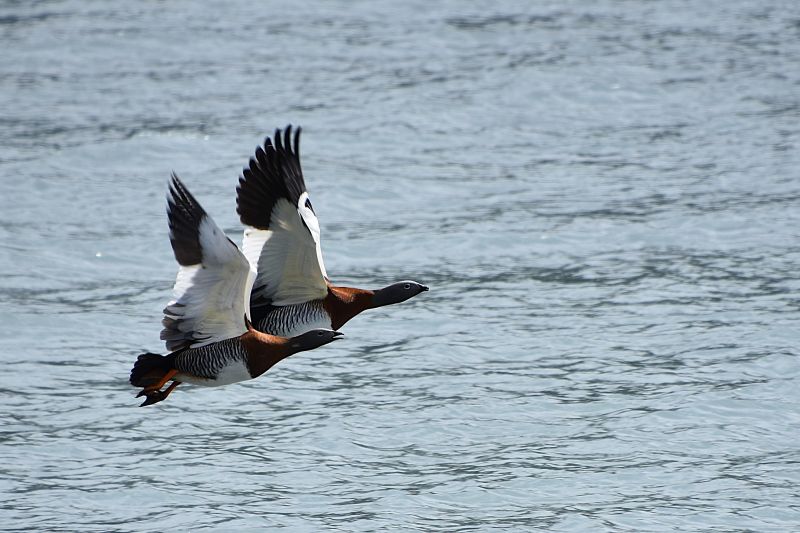
The township of El Calafate is picturesquely situated on the shore of Lago Argentino. If you have a few spare hours here, it’s well worth a stroll along the esplanade that follows the lake shore.
I visited early in the season, before the summer sun melts the mountain snow that swells the lake to its full extent, so I saw grasslands full of Upland Geese, Magellenic Snipes, Southern Lapwings (whose paranoid squawking requires some tolerance), Austral Negritos, flamboyant White-browed Meadowlarks and a multitude of ducks and migratory shorebirds. Everywhere is the Rufous-collared Sparrow, a cheeky little bird that could become annoying if it wasn’t so endearing.
Further along the shore to the north of town is the Laguna Nimez, a fabulous facility that has boardwalks throughout the 170-acre wetland reserve, and totally worth the $15 admission. Here you’ll find a photogenic habitat with flamingos, ducks, coots, swans, gulls, sandpipers and a few smaller birds that inhabit reeds and the periphery of marshes.
If you’re a hiker, you’ll head for El Chalten, the trekking capital of Patagonia. El Chalten is host to Cerro Fitzroy and Cerro Torre, extravagantly jagged Andean peaks, and the hikes to the foot of each of these jaw-dropping crags are a great day out. In between wow-inducing views of the ridges, there are Patagonian Sierra Finches, Rayaditos and very chirpy Southern House Wrens.
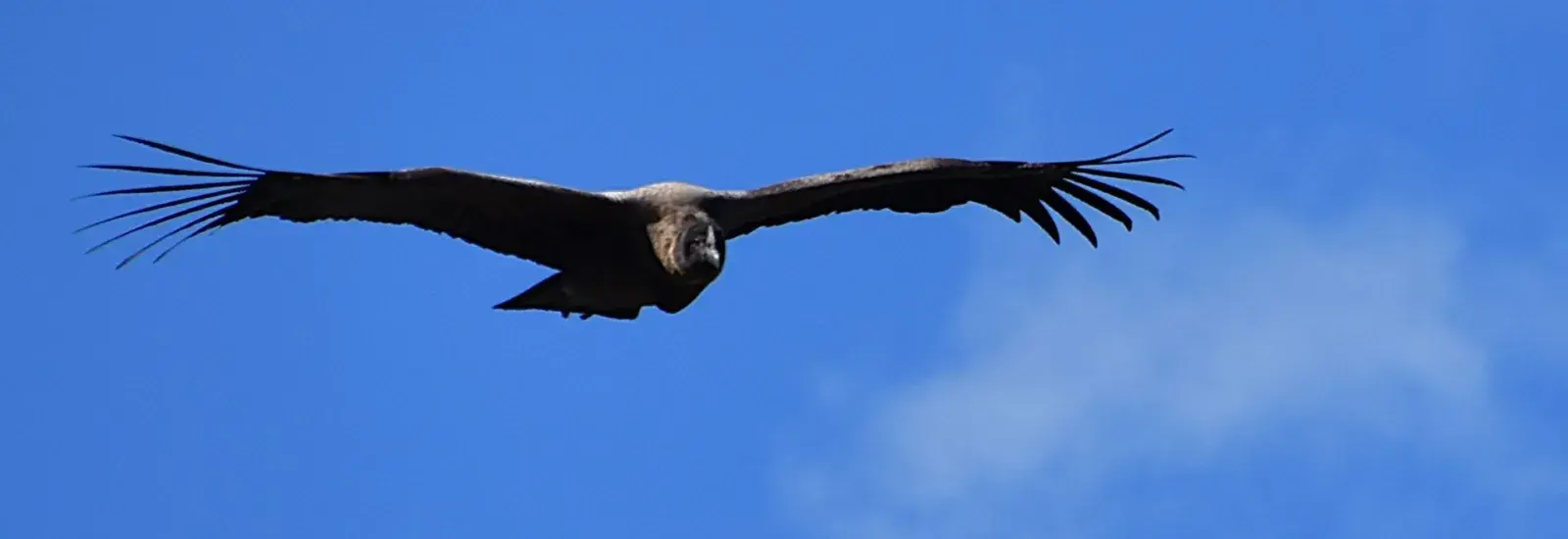
El Chalten also has a reasonable claim to being home to the Andean Condor.
Wherever you are, keep an eye to the sky, as these huge vultures glide on the thermals high overhead. There is a viewpoint overlooking the town (if you have a free morning; please note you’d ideally need to get there early), that affords views of Condors passing close overhead and sometimes below.
While you’re in El Chalten, one bird of particular note is the Austral Parakeet. It’s the southernmost of all parrots, which you’d normally expect to see in more temperate, even tropical climes. However, this bird is non-migratory, which of course means it lives down here even through brutal winters, and has even been spotted frolicking in the snow. You might find it in the trees beside the river, towards the archway that marks the start of the mountain hikes.
On the 3-hour drive between El Calafate and El Chalten, keep your eyes peeled for the Lesser Rhea (the locals will call it a ’choique’). Similar to an emu and an ostrich, this tall, flightless bird inhabits the same rolling plains as the sheep, cows and guanacos. In the journey there and back, I saw just two – you’ve got to be looking the whole time in order to create your own luck.
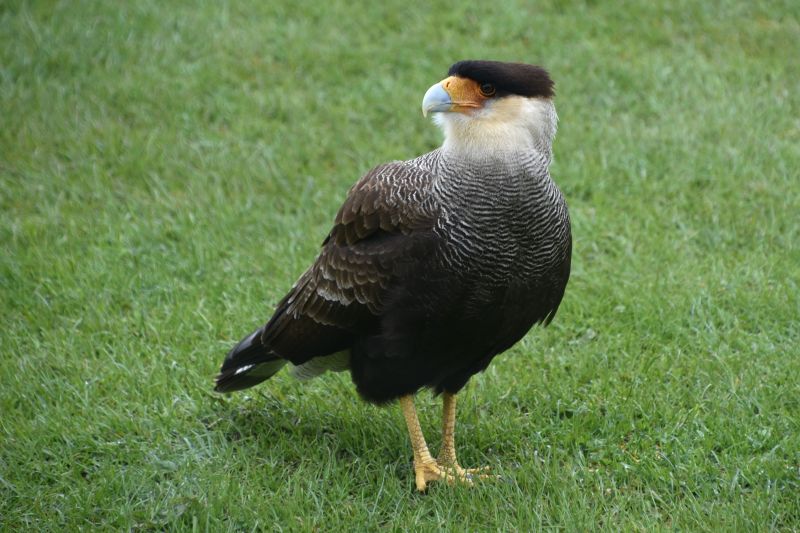
If you’re going to Antarctica, you’ll most likely be pushing off from Ushuaia. Otherwise known as the world’s southernmost city, it really does have an ‘end of the world’ feeling to it, and is an interesting place to spend an extra day or two before getting on the ship. A day tour of Tierra del Fuego National Park is worthwhile for its dramatic scenery, and here you’ll see the Flying Steamer-Duck as well as the Chimango and Crested Caracara.
The Black-faced Ibis is a good-looking bird, but my favourite is the Upland Goose, a serene and elegant waddler which is common throughout southern Patagonia, wherever there is water. The male is predominantly white and the female mostly brown; they are almost always found in pairs. Up close, you can see how beautiful their plumage is. Mother Nature at her finest design work.
I think it may even have squeezed into my Top 5 All-Time Favourite Argentine Bird List:
- Toco Toucan
- Andean Condor
- Lesser Rhea
- Austral Parakeet
- Upland Goose
Keep an eye out for the Big Five when next you’re in Argentina. If you’re ready to plan your birdwatching adventure in Argentina, the experienced team at Chimu is here to help.

FAQ's
Frequently Asked Questions
Q1. Why is Argentina a good destination for bird watching?
Argentina is an incredibly large country, with an array of climates, landscapes, and environments, which many diverse and beautiful bird species call home.
Q2. Will there be English-speaking guides available on my birding trip to Argentina?
Yes, when you travel to Argentina with Chimu Adventures, your trip will include English-speaking guides who are passionate about the country's wildlife, history, and culture. While it's always helpful to know a little bit of Spanish, it's usually possible to find English-speaking assistance in the major tourist areas.
Q3. Can I combine a birdwatching trip in Argentina with my Antarctica cruise?
Yes, the team at Chimu Adventures can assist with all of your logistics, including internal flights, hotels, transfers, and guides. Many Antarctic travellers add on time in South America either before or after their cruise.
Where Will You Go Next ?

Talk to one of our experienced Destination Specialists to turn your Antarctic, Arctic and South American dream into a reality.
Contact us