 2026/27 season starts soon. Last-minute Antarctica cruise deals now available View deals →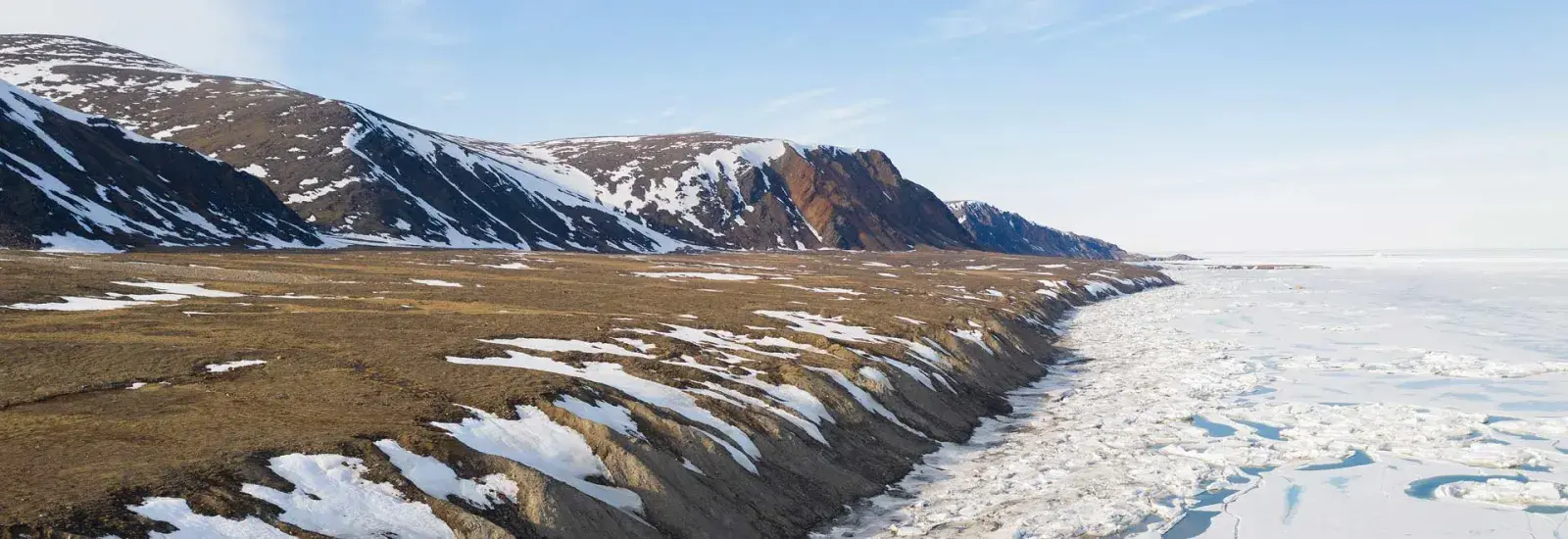
Northwest Passage & Baffin Island Expedition | Venture
21 Days
From USD 30,098
Trip Code: ACSBNWBI
DIFFICULTY RATING: 2 (light adventure)
Start: Reykjavik, Iceland
Finish: Reykjavik, Iceland
SHIP: Seabourn Venture (Arctic)
 Destination
Greenland & Canadian Arctic
 Departure Date
30/07/2027, 29/07/2028
 Meals
Meals
All Meals Onboard the Ship, Open Bar with Premium Beverages & In-Room minibar
 Transport
Group transfers to/from the vessel
 Accommodation
Cabin on board ship
Enquire Now
 Included Sightseeing
Daily Arctic Excursions, Zodiac Cruising, Onboard Expert Lectures & Briefings by the Experienced Expedition Team
NOTE: Itinerary is subject to change depending on weather & ice conditions
OVERVIEW
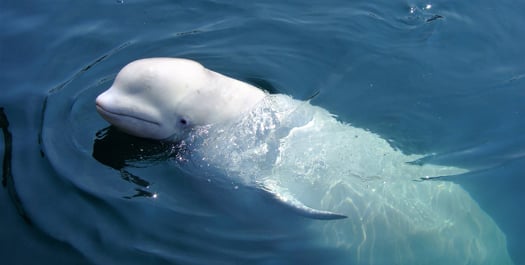
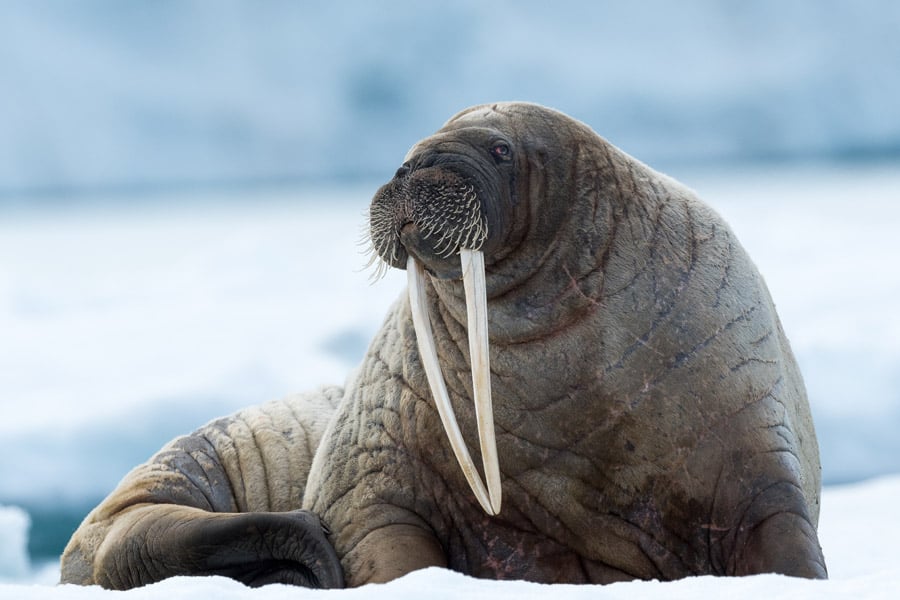
This 20‑day expedition traces remote Arctic regions between Greenland and the Canadian High Arctic, combining sea days with regular Zodiac excursions, guided tundra walks and cultural encounters in Inuit communities. You can expect great opportunities for wildlife viewing at sea level and from open deck space, with chances to spot species such as walrus, beluga, and diverse seabird species from each region throughout the passage.
The itinerary includes multiple days dedicated to exploration in Northwest Greenland and the Northwest Passage, where conditions allow for ice landings, fjord entry and flexible routing. Onboard, guests benefit from daily briefings, expert‑led discussions, and signature events like the Polar Plunge and Caviar on Ice, creating a balanced mix of field activity and educational programming.
ITINERARY
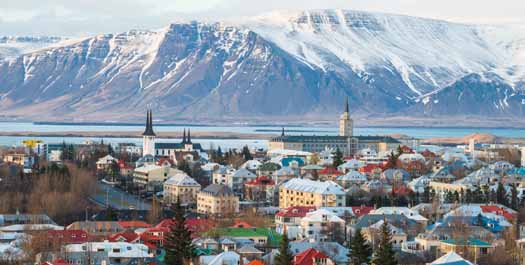
Upon arrival in Reykjavik, you will be met by a representative and transferred to the hotel included in your package. Spend the evening exploring the city while preparing for your adventure in the Arctic.
Steeped in history and bursting with contemporary flair, Reykjavík, the capital of Iceland, was founded around 870 C.E, marking the birth of the first permanent settlement on this island nation. Today, it is home to approximately 200,000 inhabitants, making up nearly 60% of Iceland's population. Reykjavík holds the title of the world's northernmost national capital, and it takes pride in its reputation as one of the cleanest, greenest, and safest cities globally. Its commitment to sustainability and eco-consciousness is evident in every corner, from its energy-efficient buildings to its pollution-free skies.
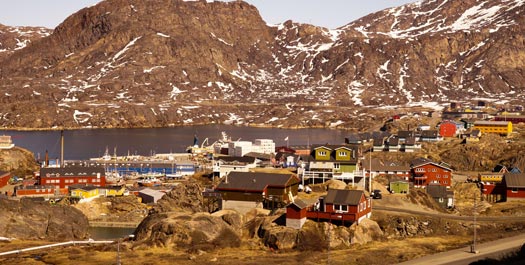
Today, you will be transferred from your hotel to the airport in due time for your charter flight from Reykjavik to Kangerlussuaq. Upon arrival in Kangerlussuaq, you will be met by a representative and transferred to the cruise ship for embarkation.
In October, 1941 the United States Army Air Force constructed an airbase at the site of Kangerlussuaq. It served as a refuelling stop for single-engine military aircraft being flown to Britain during World War II. From their last port of call, Goose Bay, Labrador, it was 1,600 kilometers (1,000 miles) to Kangerlussuaq until they could refuel. Kangerlussuaq fjord (‘Big Fjord’), is 170 kilometers (105 miles) long and was often shrouded in fog, providing a serious navigation problem for those aircrews.
Today, with the use of modern technology, navigation is no longer an issue. The landscape was ideal for the site of an airport. A large alluvial plain, deposited by the nearby glacial-outflow river, provided a perfectly flat environment for an airport. Kangerlussuaq is the largest commercial airport in Greenland and supports a population of 500. A little known fact, from 1971 to 1987, 33 missiles from various countries, were fired from Kangerlussuaq for upper atmospheric scientific research.
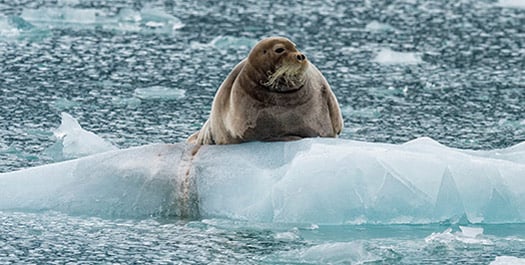
Spend your day at sea enjoying the facilities available onboard and soak in the incredible views along the way.
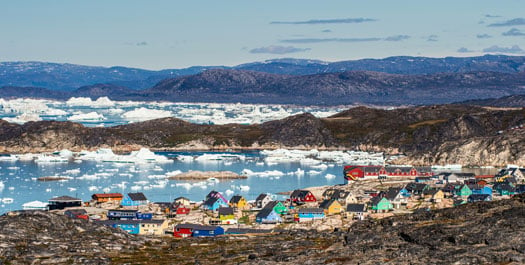
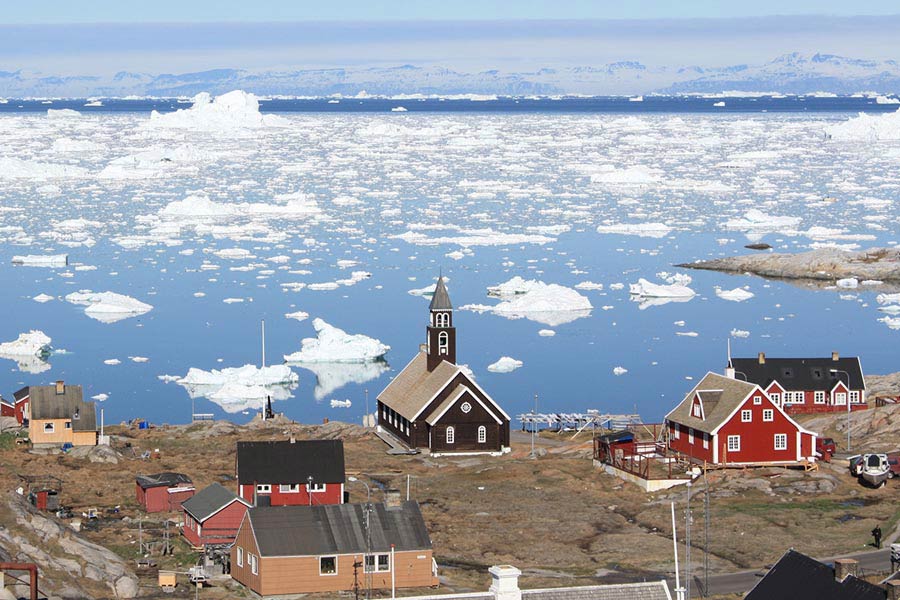
There is no other place on Earth, other than Ilulissat, Greenland that can define itself by the size and volume of its icebergs. The name Ilulissat, in fact, is the Greenlandic word for ‘Iceberg’. This is truly an iceberg paradise! Despite its proximity to huge glaciers, people have lived here in excess of 4,000 years. The modern town of Ilulissat was founded in 1741 by the Danish merchant, Jacob Severin. With a current population of 4,500 it is the third-largest city in Greenland. The narrow inner harbor is lined by a kaleidoscope of colorful houses so typical of Greenlandic villages.
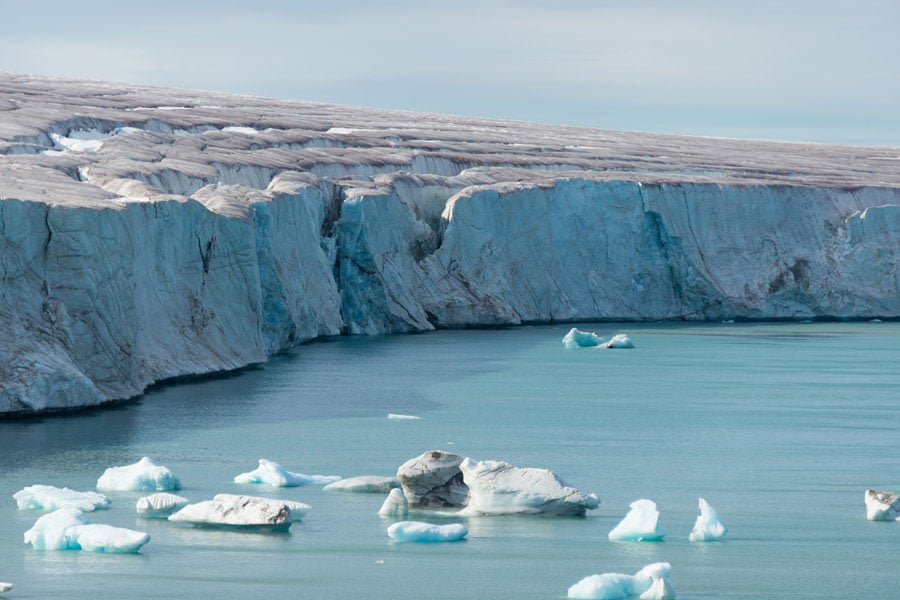
The mass and sheer volume of icebergs from nearby Jakobshavn Glacier has made Ilulissat the most popular tourist destination in Greenland. Moving at up to 45 meters (150’) per day, when averaged annually, the glacier drains 6.5% of the Greenland ice sheet and produces about 10% of all icebergs. For this reason, Ilulissat Icefjord is a UNESCO World Heritage Site.
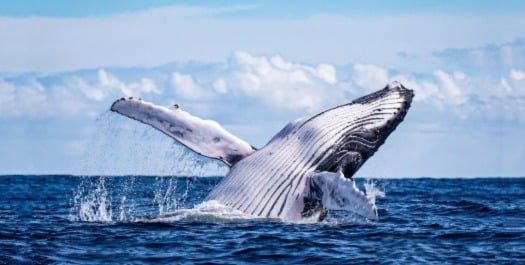
Venture into the remote and rugged realm of Northwest Greenland — the legendary Thule region, often described as “the end of the world.” This is the Arctic at its most elemental: vast, silent, and sublime. Isolated from other settlements, Thule is one of the last places on Earth where traditional Inuk practices remain largely intact. Here, dogsleds are still the primary means of transport, and hunting — including the rare pursuit of narwhals from kayaks — remains a vital way of life. Your Seabourn expedition explores this pristine frontier over several days, navigating ice-filled fjords that are almost never visited. Highlights may include Qaanaaq, one of the northernmost inhabited communities on the planet, where the rhythms of life are shaped by the Arctic environment and centuries-old traditions. The coastline is carved by ancient glaciers like Sermeq Kujalleq (Jakobshavn Glacier), one of the fastest-moving glaciers in the world and a major contributor to global sea level rise. Icebergs born here can drift as far south as Newfoundland. The landscape is dominated by towering ice walls, deep blue meltwater lakes, and tundra plains stretching to the horizon. Wildlife sightings may include humpback whales, walruses, and Arctic hares, while glaucous gulls and snowy owls patrol the skies. This is Greenland’s true frontier — raw, remote, and unforgettable. Zodiac cruising among cathedral-sized icebergs Visits to UNESCO-listed Ilulissat Icefjord Cultural exchanges with Inuit communities Opportunities for polar wildlife photography.
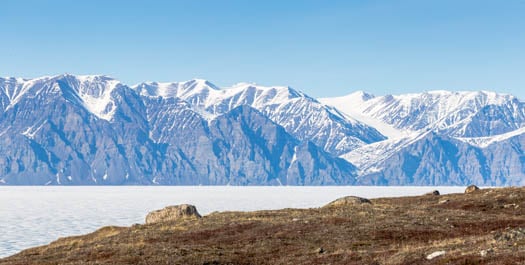
Named in 1818 by explorer Captain John Ross for the English astronomer John Pond, Pond Inlet is a town with over 1,600 inhabitants. It stands out as one of northern Canada’s most interesting, culturally rich, and welcoming communities. The town offers a glimpse into the life of the modern Inuit, with caribou antlers and skulls adorning private homes, and hides of seals, caribou, and occasionally polar bears drying on racks in the sun. The local market features parts of seal, whale, caribou, and a wide variety of fish. Wooden sledges, known as qamutiqs, now towed by snowmobiles instead of dogs, can be seen in front yards, ready for the first snowfall. The local museum and cultural center host cultural performances that showcase unique Inuit throat-singing, with dancers dressed in traditional sealskin anoraks and mukluks.
Disclaimer: This port is a clearance port on nearly all itineraries, however when conditions perfectly align, excursions to this port may be featured.
Remote and rarely visited, Erik Harbour offers a pristine Arctic landscape of rocky shores, tundra blooms, and icy waters. Uninhabited regions such as this provide ideal habitat for wildlife including Arctic foxes, and seabird colonies in an untouched corner of Nunavut.
*Final itineraries are subject to weather, ice, and other conditions and are subject to change
Sailing through the Northwest Passage is a rare travel experience that has been hundreds of years in the making. The passage — more specifically, a series of channels through the Canadian Arctic Archipelago that connects the Atlantic and Pacific oceans — extends approximately 900 miles from Baffin Island to the Beaufort Sea above Alaska. Your Seabourn ship spends nine days traversing this famed sea corridor, and while the exact route taken through the islands can vary, your expedition is sure to be one of contemplation and discovery.
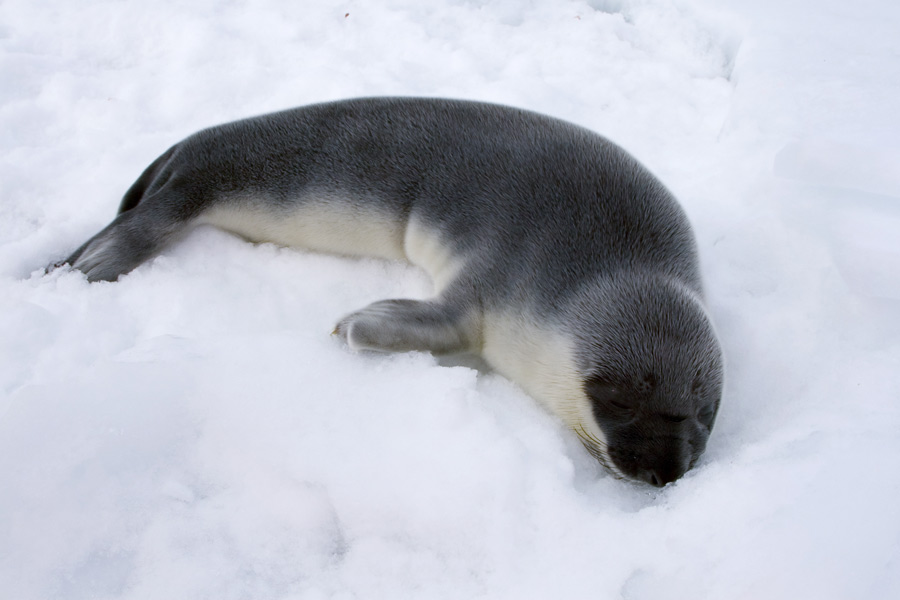
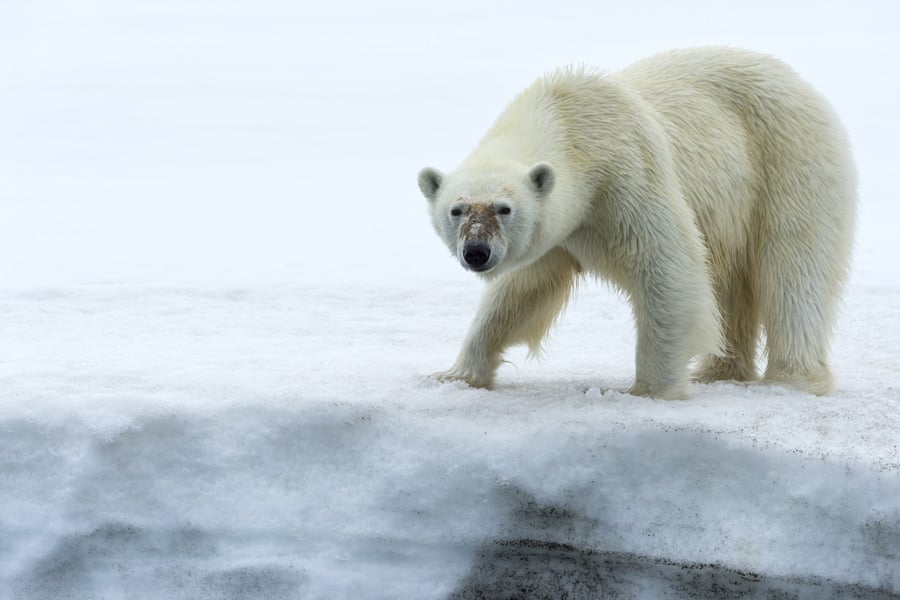
The glacier-carved landscape here is dominated by sea ice, which is used as a platform by marine mammals such as walruses and Arctic ringed seals — as well as the polar bears that hunt them. Yet the region has experienced monumental change since Norwegian explorer Roald Amundsen first mapped the Northwest Passage in 1906, and the rapidly shrinking sea ice coverage now allows ships to navigate the route year-round — while also creating existential challenges for the animals that rely upon the ice for survival. Many of the areas you pass through were traditional Indigenous hunting and fishing grounds, and archaeological discoveries show that the Pre-Dorset people occupied this region some 4,000 years ago.
Highlights along the Northwest Passage include:
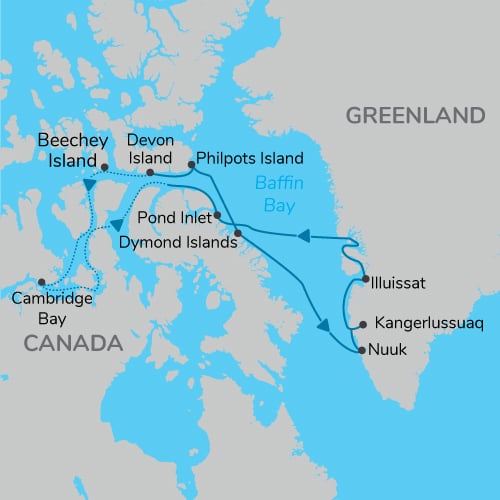
Devon Island: The world’s largest uninhabited island, located west of Baffin Bay, is known as “Mars on Earth” for its barren, rocky terrain and polar desert climate.
Beechy Island: This tiny island, connected to Devon by a thin isthmus, is the final resting place for four members of the doomed Franklin Expedition of 1845.
Cambridge Bay: A visit to this small Inuit town — the administrative hub for Canada’s Nunavut territory — offers insight into how people survive in such a remote and harsh environment.
Bellot Strait: Steep slopes, strong currents, and thick sea ice make this narrow gap between Somerset Island and mainland Canada a navigational challenge. (Fear not, though: if it proves impassable, your Seabourn captain has other options!)
INCLUDED EXPEDITIONS:
Zodiac Excursions
Get an up-close perspective of this icy realm on regular Zodiac cruises, navigating huge icebergs and glacier fronts while your Expedition Team members point out marine mammals and wildlife ashore.
Nature Hikes
Set out on foot to explore beautiful, tundra-covered landscapes with your Expedition Team members, who delight in pointing out delicate plants and flowers that thrive in this hostile environment. You can hike to an ancient Thule settlement of stone pit houses on Devon Island, and encounters with arctic foxes, hares, and other wildlife are always possible.
OPTIONAL EXPEDITIONS (whenever possible):
Kayak:
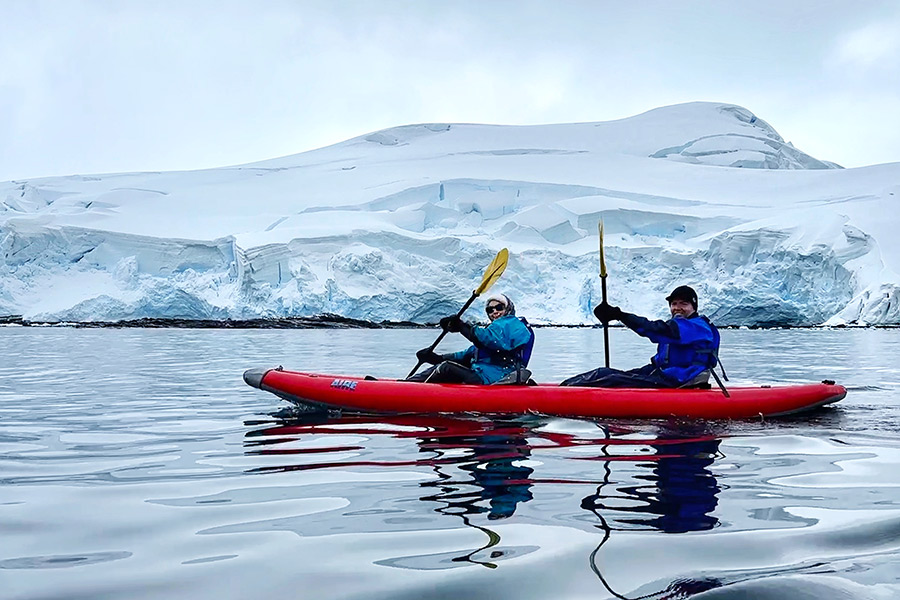
Join your Kayak Team for a paddle along the shores wherever your expedition stops. The chance to experience this wild, remote place from a water-level perspective is a rare and special privilege.
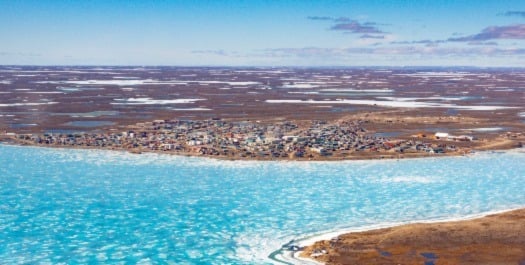
A visit to this small Inuit town — the administrative hub for Canada’s Nunavut territory — offers insight into how people survive in such a remote and harsh environment.
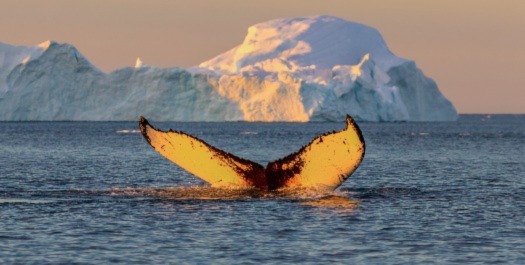
Sailing through the Northwest Passage is a rare travel experience that has been hundreds of years in the making. The passage — more specifically, a series of channels through the Canadian Arctic Archipelago that connects the Atlantic and Pacific oceans — extends approximately 900 miles from Baffin Island to the Beaufort Sea above Alaska. Your Seabourn ship spends nine days traversing this famed sea corridor, and while the exact route taken through the islands can vary, your expedition is sure to be one of contemplation and discovery.
The glacier-carved landscape here is dominated by sea ice, which is used as a platform by marine mammals such as walruses and Arctic ringed seals — as well as the polar bears that hunt them. Yet the region has experienced monumental change since Norwegian explorer Roald Amundsen first mapped the Northwest Passage in 1906, and the rapidly shrinking sea ice coverage now allows ships to navigate the route year-round — while also creating existential challenges for the animals that rely upon the ice for survival. Many of the areas you pass through were traditional Indigenous hunting and fishing grounds, and archaeological discoveries show that the Pre-Dorset people occupied this region some 4,000 years ago.
Highlights along the Northwest Passage include:
Devon Island: The world’s largest uninhabited island, located west of Baffin Bay, is known as “Mars on Earth” for its barren, rocky terrain and polar desert climate.
Beechy Island: This tiny island, connected to Devon by a thin isthmus, is the final resting place for four members of the doomed Franklin Expedition of 1845.
Cambridge Bay: A visit to this small Inuit town — the administrative hub for Canada’s Nunavut territory — offers insight into how people survive in such a remote and harsh environment.
Bellot Strait: Steep slopes, strong currents, and thick sea ice make this narrow gap between Somerset Island and mainland Canada a navigational challenge. (Fear not, though: if it proves impassable, your Seabourn captain has other options!)
INCLUDED EXPEDITIONS:
Zodiac Excursions
Get an up-close perspective of this icy realm on regular Zodiac cruises, navigating huge icebergs and glacier fronts while your Expedition Team members point out marine mammals and wildlife ashore.
Nature Hikes
Set out on foot to explore beautiful, tundra-covered landscapes with your Expedition Team members, who delight in pointing out delicate plants and flowers that thrive in this hostile environment. You can hike to an ancient Thule settlement of stone pit houses on Devon Island, and encounters with arctic foxes, hares, and other wildlife are always possible.
OPTIONAL EXPEDITIONS (whenever possible):
Kayak:
Join your Kayak Team for a paddle along the shores wherever your expedition stops. The chance to experience this wild, remote place from a water-level perspective is a rare and special privilege.
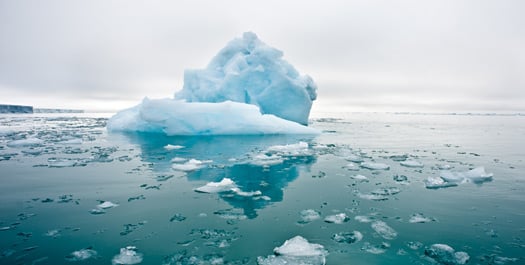
This small island group in Hudson Bay is rich in biodiversity, from walruses and seals to migratory birds. Zodiac cruising reveals rugged coastlines and the raw beauty of Canada’s far north.
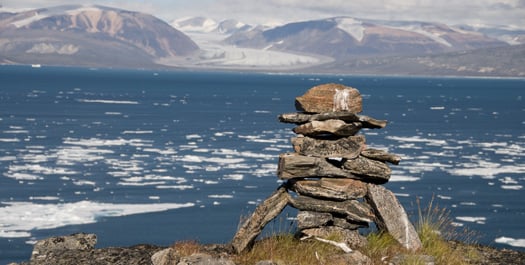
In the high Arctic silence of Baffin Bay, where icebergs drift like ancient sculptures and the horizon stretches into eternity, your day begins with a sense of mystery and promise. This is the day designed for spontaneity—an open canvas for the Expedition Leader to paint with the colors of the wild. You might find yourself cruising past towering fjords, stepping ashore on this remote island to trace the footsteps of Inuit ancestors, or watching for pods of belugas prowling the shallows and icy channels under a sky brushed with northern light. With the flexibility of an extra day built into your journey, this surprise experience is crafted in real time, responding to nature’s rhythm and the spirit of exploration.
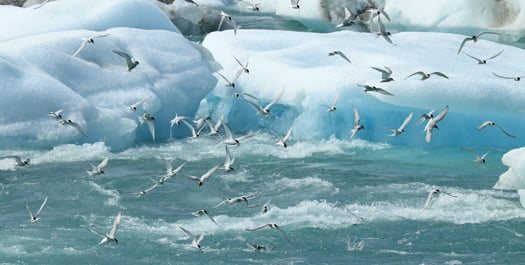
Spend your day at sea enjoying the facilities available onboard and soak in the incredible views along the way.
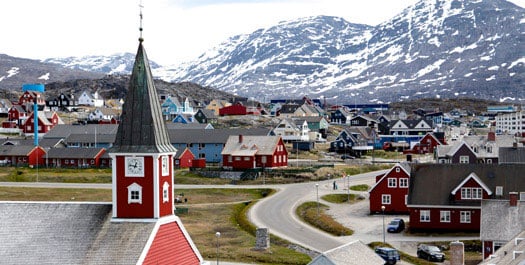
Greenland’s capital Nuuk, is a city of vitality and Greenlandic culture. It’s here that old traditions and modern influences combine to create a diverse population. Nuuk is the home of the University of Greenland with its 650 students and the Greenland National Museum with is its extensive historical archives and cultural displays. Also of interest are the Nuuk Art Museum and the Kayak Museum. The Art Museum holds a body of 300 paintings primarily featuring the work of traveling European artists, while the Kayak Museum houses a very impressive collection of sealskin kayaks and traditional hunting artifacts. The modest wooden frame of the Nuuk Cathedral, built in 1849, is a recognizable landmark on Nuuk’s skyline.
The site of Nuuk was occupied as far back as 2,200 B.C.E. by ancient pre-Inuit peoples from Canada. It was settled again in the 10th century by Viking explorers. The current city was founded in 1728 by Danish missionary Hans Egede. A statue of Egede stands adjacent to the cathedral.
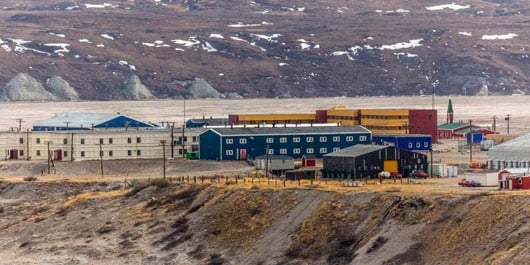
Today, your adventure on board comes to an end. Upon disembarkation in Kangerlussuaq, you will be transferred to the airport for your charter flight to Reykjavik. On arrival in Reykjavik, you will be transferred to your included hotel for the night.
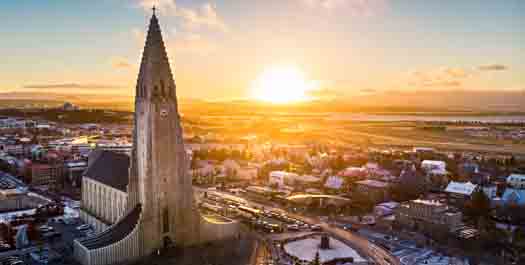
This morning, you will be picked up from your hotel and transferred to the airport in time for your onward flight.
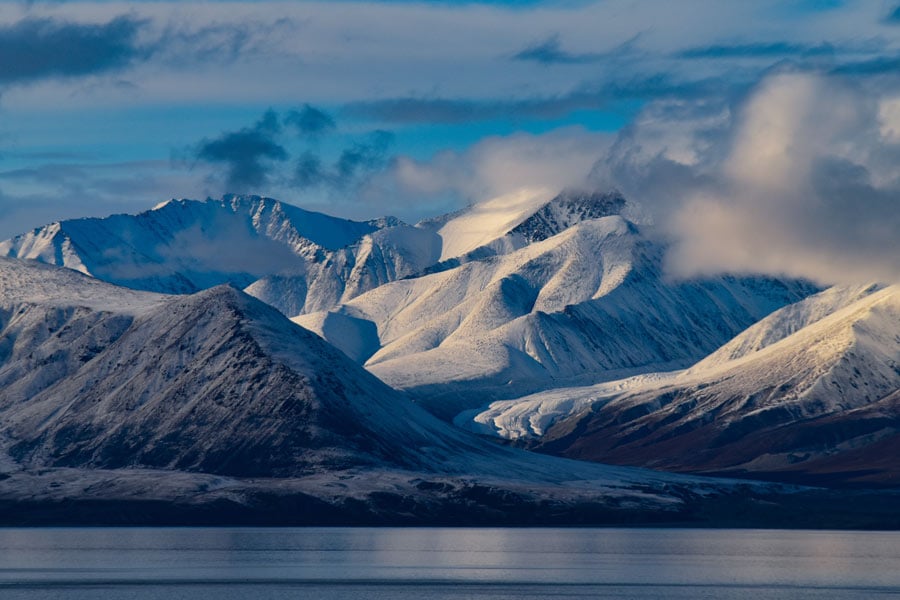
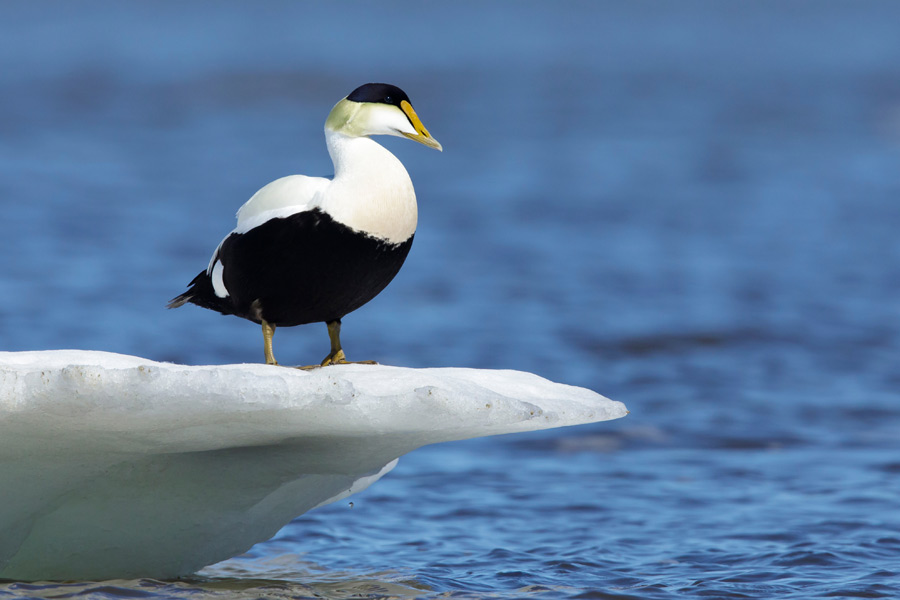
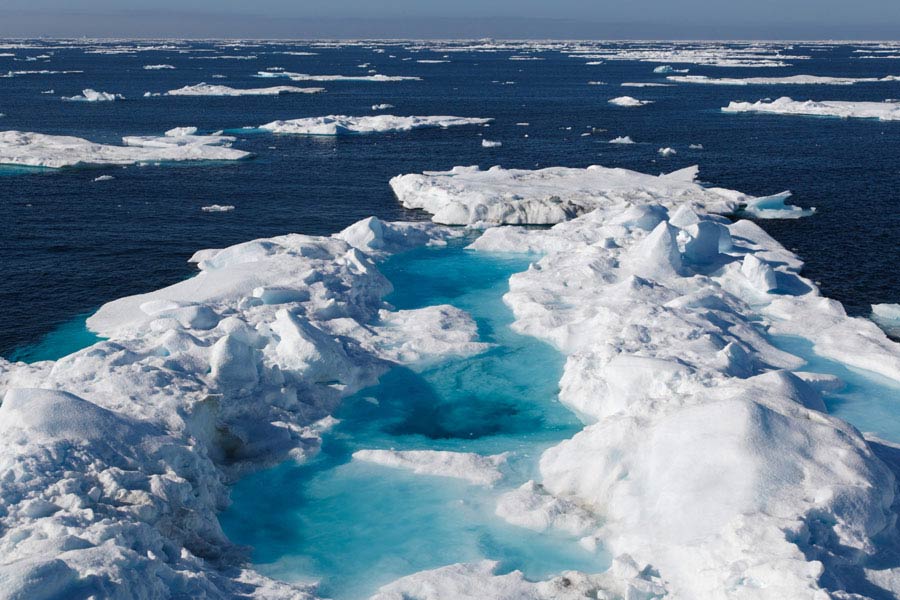
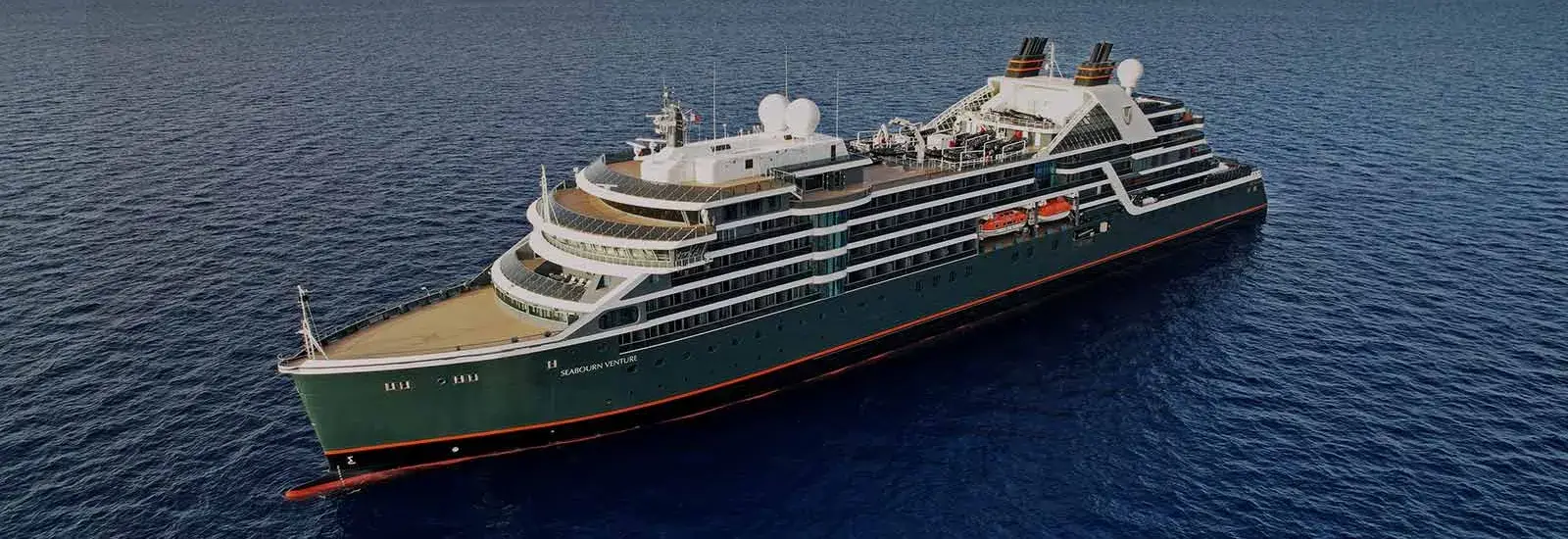
Seabourn Venture (Arctic)
Explore the Polar Regions onboard the ultra luxury Seabourn Venture. First sailing in 2022 and taking up to 264 guests the ship is equipped with a PC6 ice class rating and carries 2 custom built submarines and kayaks. The ship is well equipped with 132 luxurious, all-verandah suites and has a wide range of facilities onboard, including premium dining options, a spa, fitness centre and pool. There are plenty of shared spaces to relax and enjoy the view as you sail into some of the most remote regions in the world. Enjoy zodiac expeditions with the knowledgeable expedition crew and learn about the areas you are exploring with a range of lectures onboard the ship.
Ice Class: Length: 170 m / 558 ft
Breadth: 26 m / 85 ftMax
Draft: Cruising
Speed: 22 kn / 41 km/h / 25 mph
Electricity: Passenger
Capacity:264
View Ship Details
Included ACTIVITIES
These are included in your cruise fare. Activities vary by itinerary and destination and are subject to regulations, weather conditions and other factors.
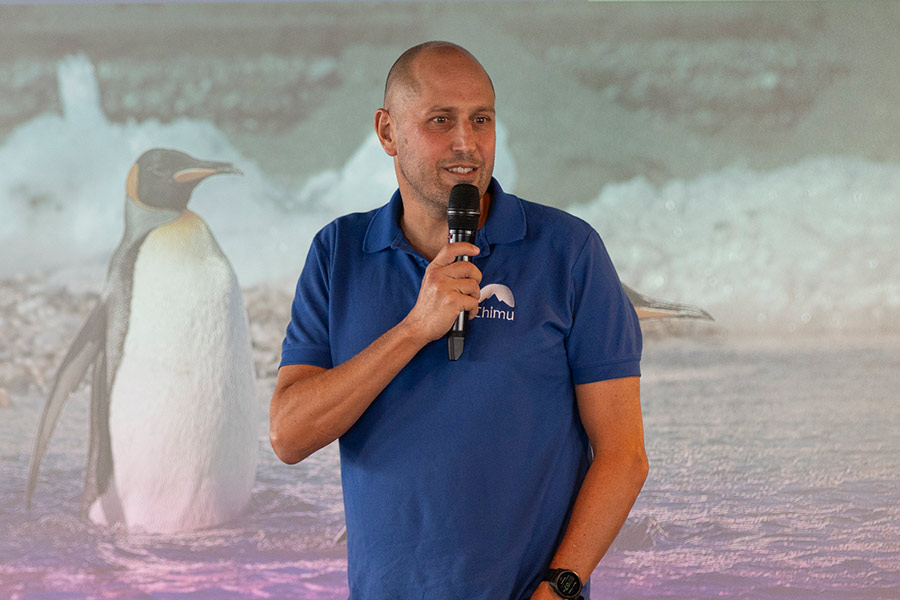
Expert Lectures
Learn More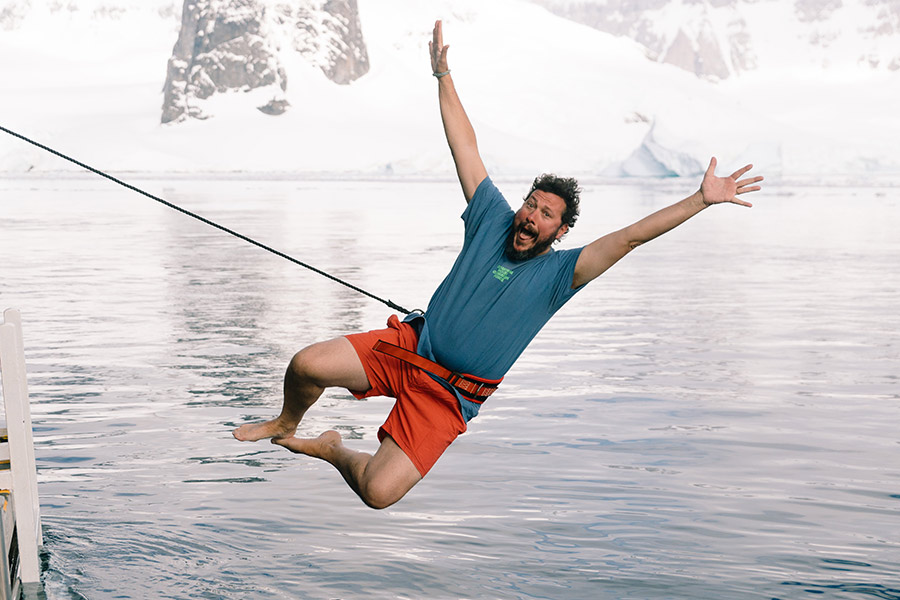
Polar Plunge
Learn More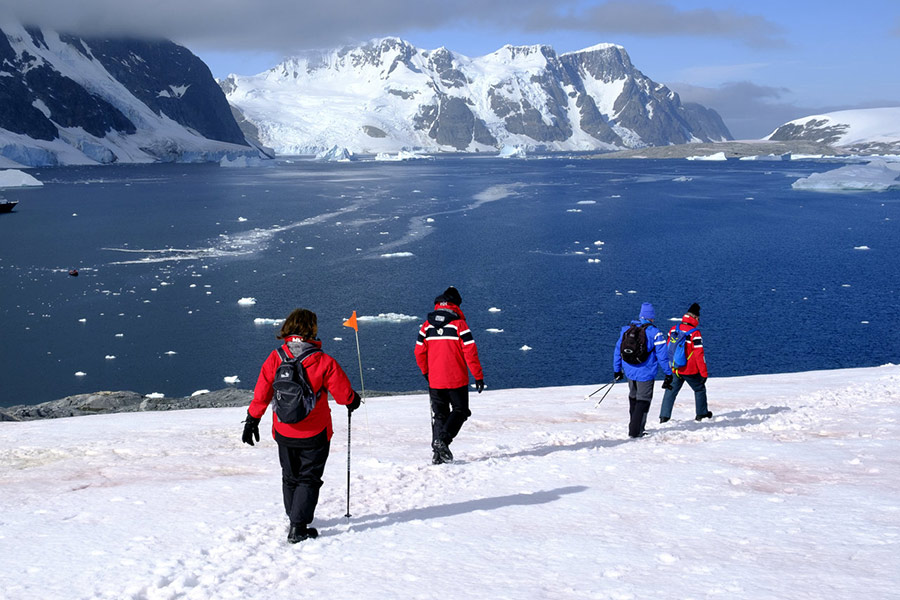
Shore Excursions
Learn More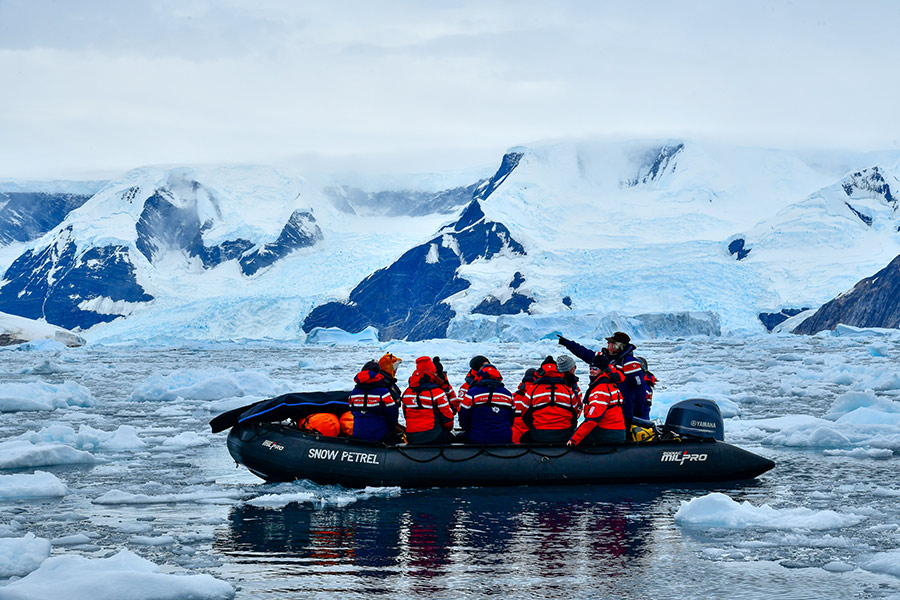
Zodiac Cruises
Learn MoreOPTIONAL ADVENTURES ADD ONS
These can be booked in advance at an extra cost. Activities vary by itinerary and destination.
Pricing per person & date
Pricing & Availability Last Updated 28 August 2026
| Northwest Passage & Baffin Island Expedition | Venture from USD 30,098 | ||
| Departing | Ending | Duration |
|---|---|---|
| 30 Jul 2027 | 19 Aug 2027 | 21 |
| 29 Jul 2028 | 18 Aug 2028 | 21 |
Important Information
Prices from the operator are dynamic in nature. They are correct at time of publishing but are subject to change at any time until the time of booking. Please Contact us for the most current availability and up to date cabin pricing.
Pricing is subject to change based on currency fluctuation, selected cabin, availability at the time of booking and may be withdrawn or varied at any time without notice.
Prices are based on per person, twin share*
Prices are correct at time of publishing but are subject to change at any time.
Itinerary is subject to change depending on weather and ice conditions
INCLUSIONS
Accommodation onboard the Venture in booked cabin category
Group transfers to/from the airport and to/from the ship* (subject to date/time restrictions*)
All meals onboard the Venture including snacks and 24/7 in room dining
Complimentary spirits and wine available on board at all times - full open bar including premium beverages & in room minibar
Inspiring enrichment program and lectures from the expedition team
All applicable shore excursions and zodiac cruising (except paid adventure options with cost)
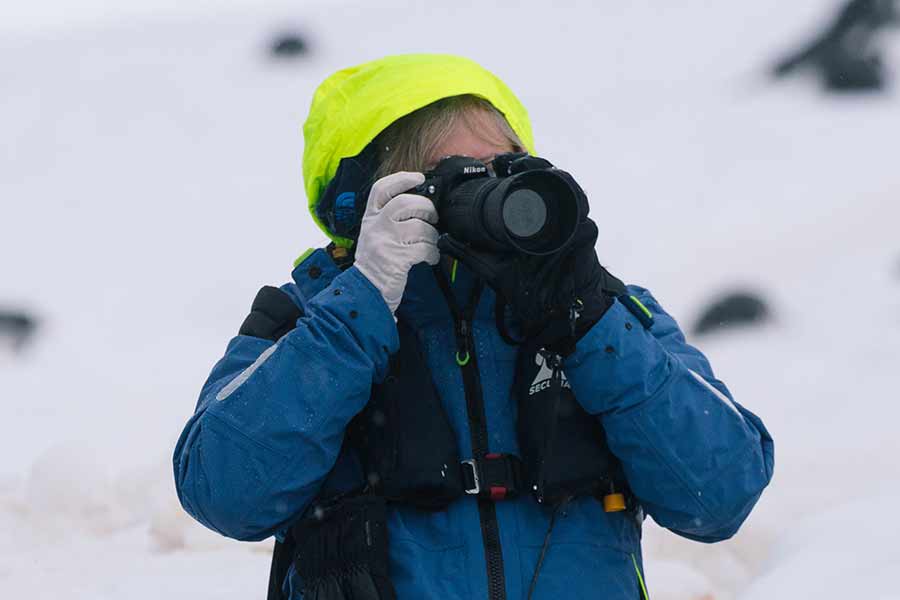
Digital photography workshops
Complimentary expedition-grade parka and day pack
All port taxes & landing fees
EXCLUSIONS
International or internal flights unless specified
Airport transfers, taxes and excess baggage charges unless specified
Meals other than those specified in the pre-departure information
Pre or post cruise travel expenses
Visa (if applicable) and passport fees
Travel insurance (compulsory)
Fuel surcharge may be applied to all bookings
Paid adventure options and all personal expenses
Miscellaneous extras
Laundry and communication charges on board
Tipping onboard (optional) - We recommend $15USD per person per day
- 2 (light adventure)
Available on request. A Single Supplement may be applied. Subject to availability. Please note 'willing to share' option is not available. Contact us for more details.
Departure date, fuel surcharges, cabin category, currency fluctuations, seasonality and availability.
